
Knows the salinity of your soil with the instruments of our online shop.
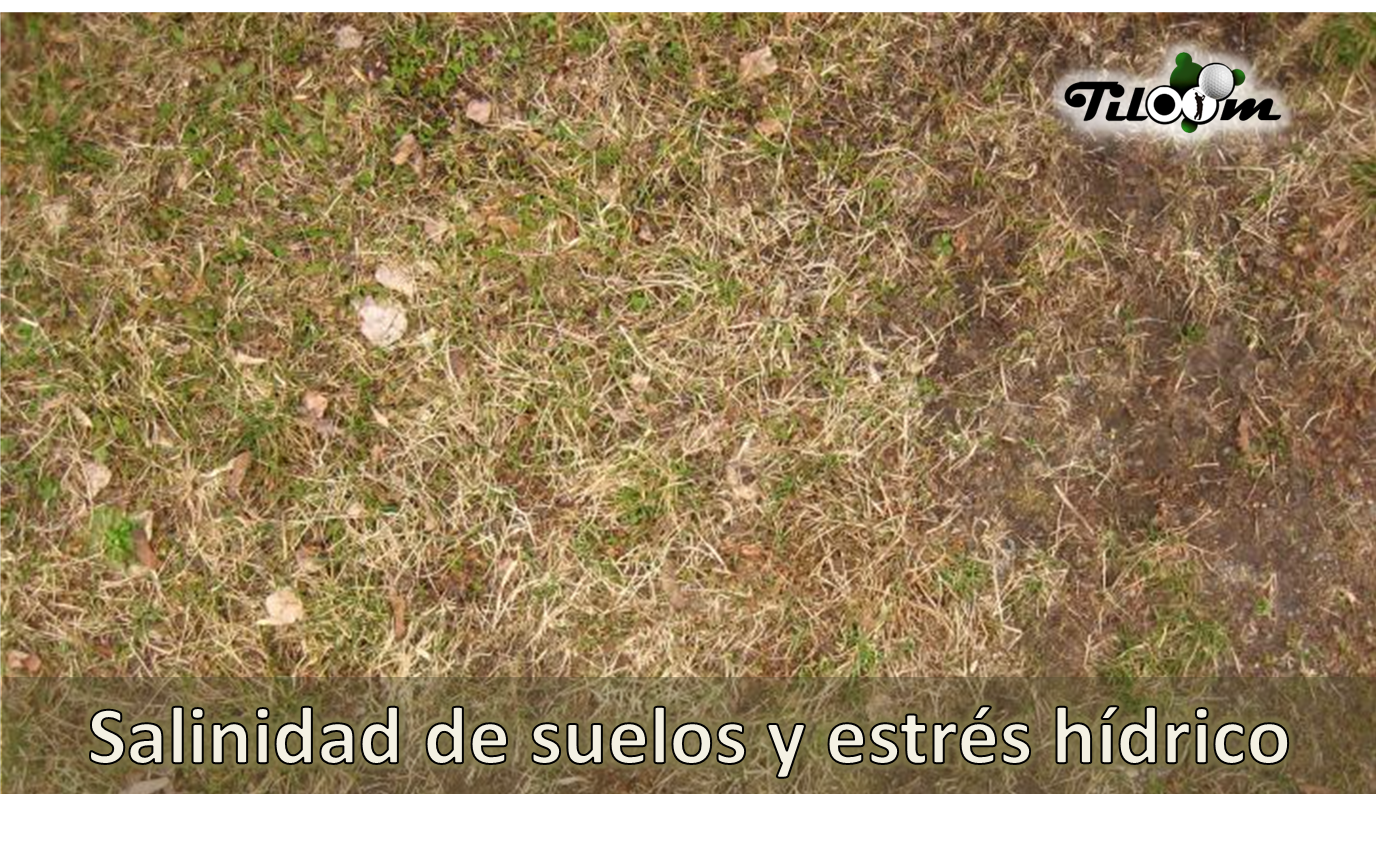
Sometimes a wet soil supports plants that have a distinct appearance of hydric stress. On these occasions the problem is not water deficit, but the effects of salinity on water uptake.
At agronomy Salinity refers to the presence in soil and water of ions resulting from soil erosion into watercourses, of marine origin, or from the application of fertilisers inorganic. Depending on the final concentration of salts in the soil pore water, the plant may be able to absorb water to carry out its processes; otherwise, it will experience problems with its productivity and health.
The semi-permeable membranes of the plant kingdom absorb water in search of a salt balance. Soils have lower salt concentrations than the roots, and in order to equalise the concentrations, the membranes allow water to pass through. However, if the situation is the opposite, the plant will find itself in a situation of hydric stress known as plasmolysis.
In the following GIF you can see how not all the cell wall is occupied as it should be for good turgor and even a slow retraction can be seen. This is due to the fact that in the experiment an onion slice was taken and wetted with a saline solution, the resulting effect is the emptying of the liquid volume of the cells to the outside.
Plasmolysis is a much more common effect than we think, it is always seen when some lettuce is left in the salad. The salts from dissolving the dressing leave the leaf looking limp and not very turgid.
Andreas Franz Wilhelm Schimper in his collaborative book Plant-geography Upon a Physiological Basis develops the theory of physiological dryness. The concentration of salts in a soil reduces the amount of useful water the plant is able to absorb until, for a particular species, it cannot survive.

Depending on the origin of the salinity the most effective method to remove it is by using irrigation that dissolves the salts and percolates down to deep profiles that will not affect the roots of the plants.
This is not always the reason why salts are harmful to plants, this salinity can have other negative effects that will not be discussed in this entry:
 Español Español
  English (UK)
 Português
 Français
 Italiano
 Deutsch
 العربية