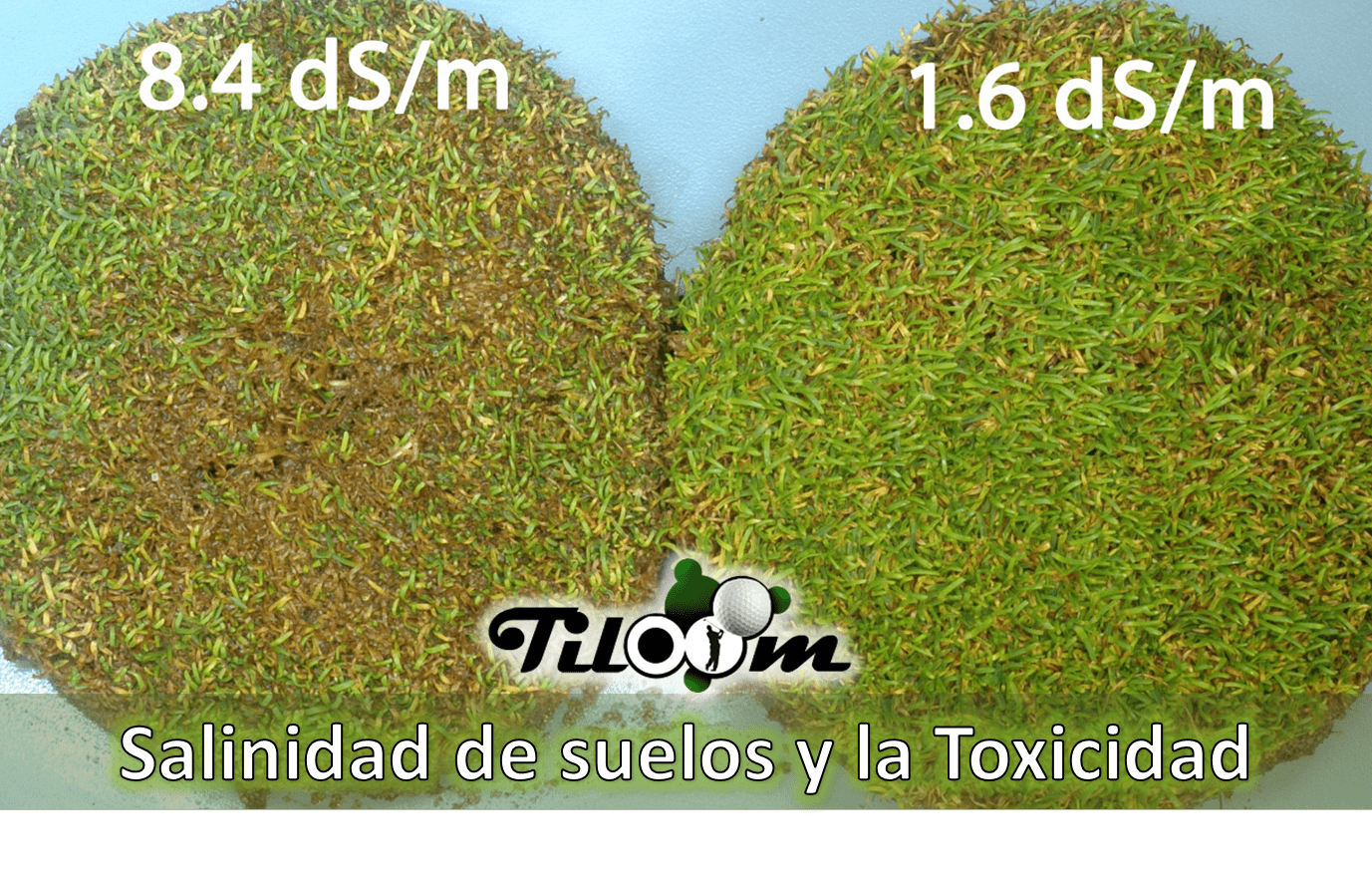
Soil salinity management and consequent toxicity is synonymous with leaching and leaching of salts.
Most of the problems arising from excessive salinity are as explained in the previous entry physiological water deficit, due to osmosis between the roots and the soil. But there is another problem that has a negative influence on plant development, the toxicity. Excess salts in the rooting horizon of a soil are a trigger for problems for the vegetation cover.
Since salts are soluble, problems can generally be avoided by irrigating heavily in the drier seasons and not aiming to cover the water table. evapotranspirationThe movement of salts to deeper soil horizons where they do not interact with the canopy tissues should always be kept in mind not to irrigate more than the volume of the soil that has been irrigated, but rather to encourage the movement of salts to deeper soil horizons where they do not interact with the canopy tissues. hydraulic conductivity of the soil to prevent run-off and to ensure effective flushing.
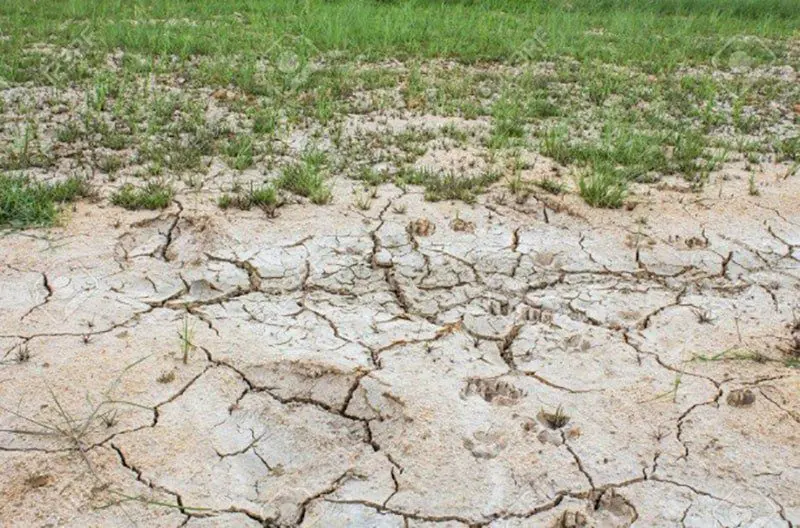
The water deficit is not the only problem when the level of salts in the soil is too high.

Excess accumulated salts have a high risk of toxicity to the crop.
- The Sodium is an element present in all soils and water in some concentration, but generally it should not be of concern if it is not present in irrigation water at values above 70 mg/l. It is absorbed by the roots as well as by the leaves and can cause, in addition to the problems of soil structure and sequestration of nutrients, the burning of the tissues it contacts. Although it may not seem obvious, both the tolerant species Sodium burns can occur in the summer season because of frequent and short watering times, which encourage sodium accumulation.
To combat sodium accumulation in the soil, gypsum or calcium sprayed amendments are needed, which are very effective but slow to work. In our entry on the SAR and the PSI The effects are discussed in more detail. - The Chlorine is a very reliable indicator of the processes soil physico-chemicals and can be used as a soil salinity indicator due to its conservative characteristics. Grasses are not particularly sensitive to chloride and can tolerate levels up to 100 mg/l. However, they may suffer injury when irrigated with water containing > 355 mg/l chloride. And some ornamentals are sensitive to chloride concentrations above 70 mg/l. When chlorine is absorbed by the roots it decreases the effective production of chlorophyll, dulling their green colouring and diminishing their ability to recover.
All elements are susceptible to cause phytotoxicity if appropriate values are reached. The values given were obtained from the Duncan, R.R., R.N. Carrow, and M. Huck. 2000. "Understanding Water Quality and Guidelines to Management. USGA Green Section Record. September-October, pp. 14-24.
- Toxicity due to Boron is rarely taken into consideration even if it is of importance. For some ornamentals at concentrations as low as 1 to 2 mg/L in irrigation water, toxicity may be present. Symptoms develop which appear as necrosis at the margins of older leaves. In comparison, grasses are more tolerant to boron and are able to thrive in soils with boron concentrations of 10 mg/kg. However, one has to be very careful if the irrigation water has boron concentrations above 2 mg/l.
Other salts that can cause toxicity are described in more detail. All values are expressed in mg/l.
| Macronutrient | Under | Normal | High | Very High |
|---|---|---|---|---|
| Nitrogen (N) | <1.1 | 1.1-11.3 | 11.3-22.6 | >22.6 |
| Nitrate (NO3-) | <5 | 5-50 | 50-100 | >100 |
| Ammonium (NH4-) | <2 | 2-75 | 75-100 | >100 |
| Phosphorus (P) | <0.01 | 0.1-0.4 | 0.4-0.8 | >0.8 |
| Potassium (K) | <5 | 5-20 | 20-30 | >30 |
| Calcium (Ca) | <20 | 20-60 | 60-80 | >80 |
| Magnesium (Mg) | <10 | 10-25 | 25-35 | >35 |
| Sulphur | <10 | 10-30 | 30-60 | >60 |
| Micronutrient | Acceptable | Suggested maximum concentration |
| Iron (Fe) | 2.4-4.0 | 5.0 |
| Manganese (Mn) | <0.2 | 0.2 |
| Copper (Cu) | <0.2 | 0.2 |
| Molybdenum (Mo) | <0.1 | 0.1 |
| Zinc | <0.3 | 2.0 |
| Boron | <2.0 | 2.0 |
Electroconductivity meters are the most effective instruments to handle correctly, our favourite is the FieldScout Soil and Water EC MeterThe system can be used to determine very precisely the economic soil salinity.
Other instruments such as the POGO or the TDR allow these measurements to be made with the addition of humidity measurement.