

The water is the most important and limiting growth factor of all. Its molecule is made up of two hydrogen atoms and one oxygen atom joined by a covalent bond.
The interaction of these dipoles is responsible for the surface tension of the water, i.e. the ease with which the soil "wets out".
This is where surfactants (surfactants) come into play, which are widely used in the world of greenkeeping. These reduce the surface tension of the water, decreasing the formation of dew on the surface of the greens and, in turn, the proliferation of fungal diseases, such as the dollar spot on low nitrogen, dew-covered greens.
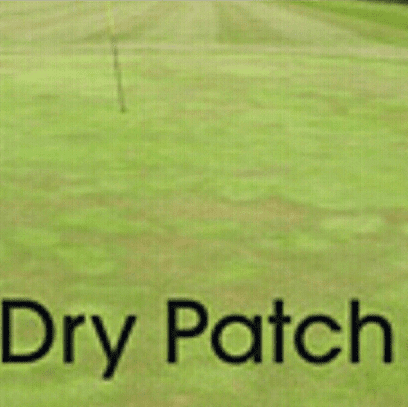
Another very important effect of using surfactants is the elimination of hydrophobic areas, known as “dry patches”. These are attributed to the decomposition effects of mushrooms Basidiomycetes. Fungi from the same group as the microorganisms that cause the typical “fairy rings” or “witch's rings” in the soil.
The amount of water that can be taken up by the roots is the amount of water surrounding the roots and will therefore depend on different soil characteristics such as:
 Español Español
  English (UK)
 Português
 Français
 Italiano
 Deutsch
 العربية