

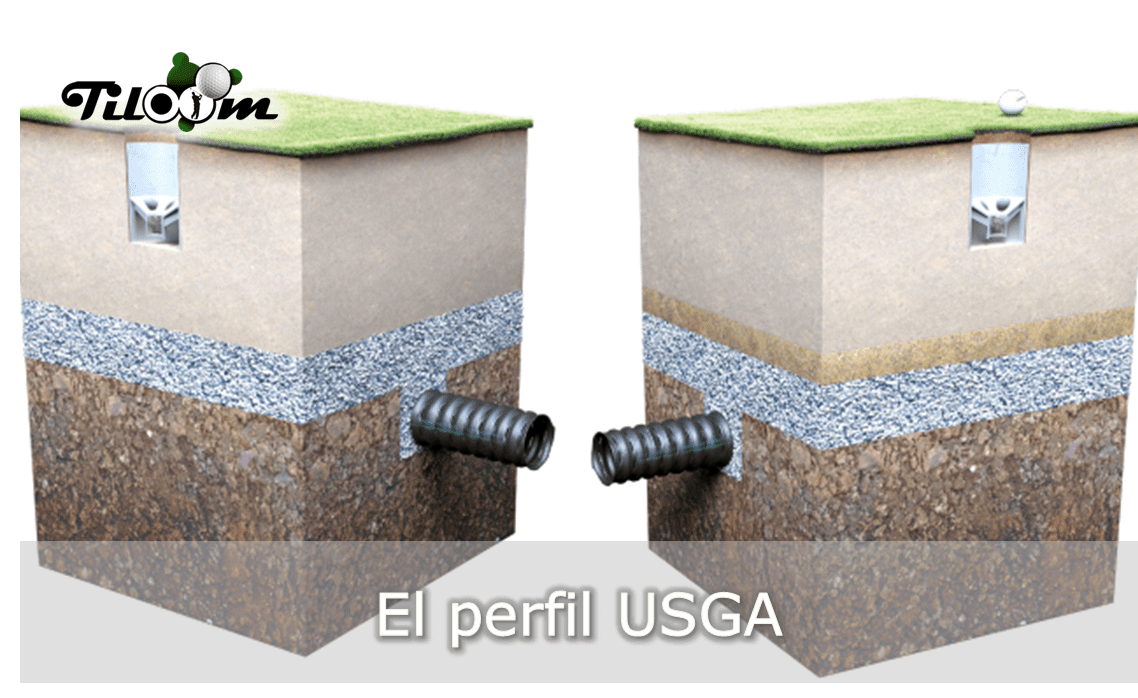
In the 1960s, the United States Golf Association ( USGA ) defined the construction of a green as a sandy profile on a layer of gravel. This is now assumed to be a good construction method, but are we clear on the science behind the choice of materials?
The cohesion is the force that holds the molecules of a fluid together, for example it is visible when a glass is filled, just before it overflows you can see how the water builds a dome that allows the glass to fill slightly more than its capacity. This force is maintained over time until the mass of water is so great that it falls because the force of gravity is greater than the force of adhesion.
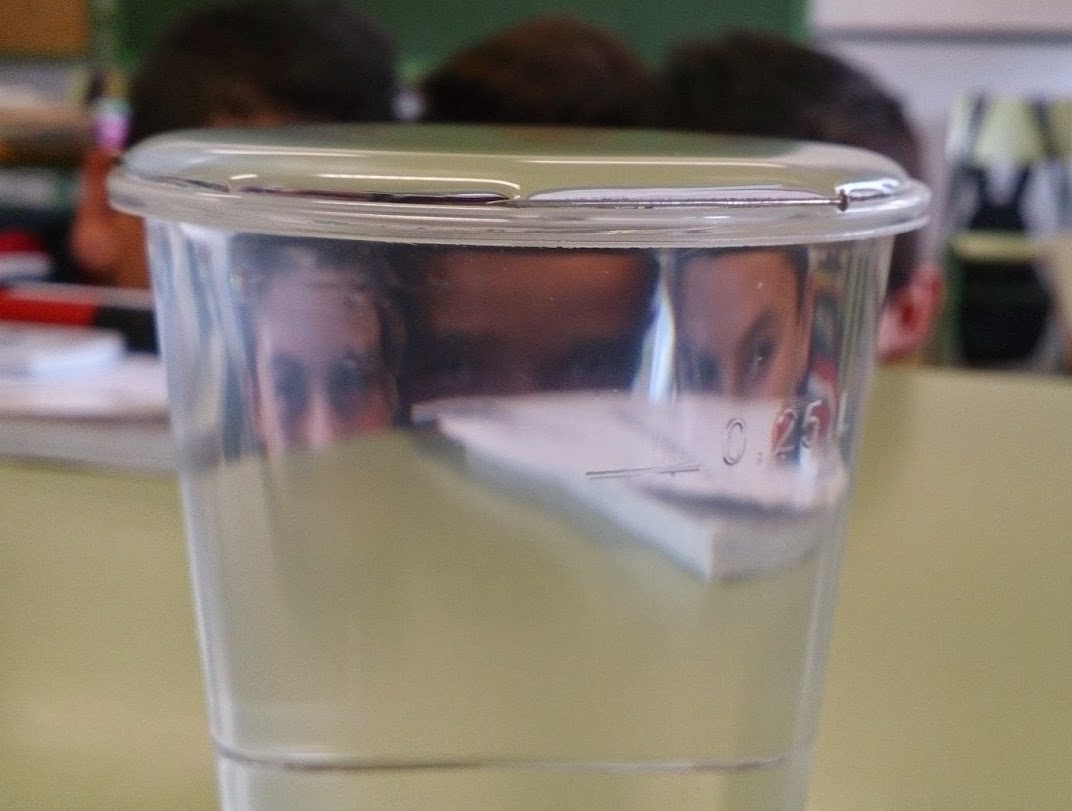
On the other hand, the membership is the force exerted by materials on the fluids that hold them together. This force is observable for example in the meniscus of a test tube.

Once the two forces are known, the explanation of the USGA profile is simpler: The sand in the top layer allows water to infiltrate to the deepest part of the soil, preventing puddles. It also means that the soil never remains saturated avoiding the anoxia and the death of the grass by asphyxiation.
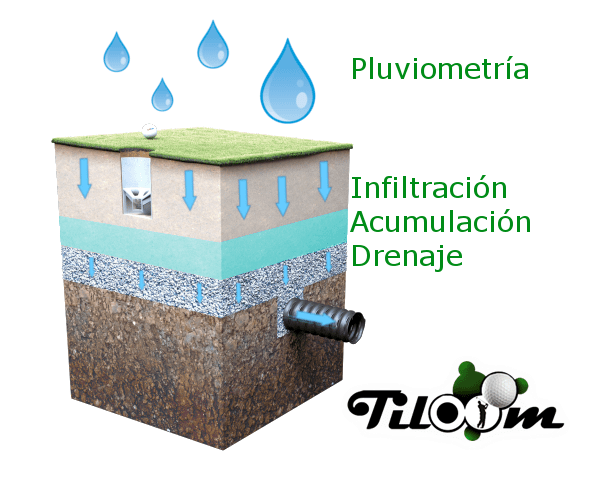
Due to cohesion and adhesion effects, the water does not fall to the gravel profile until the mass of water becomes so large that the cohesive forces between the water molecules and the adhesion force between the water and the sand particles are less than the force of gravity on the accumulated water. At that point the accumulated water will drain through the gravel horizon until the cohesive and adhesive forces themselves can once again maintain the water on the drainage layer. infiltrated water .
In effect, the profile works like a sponge. By saturating it with the irrigation drains until the upper part is at field capacity, but the lower part by cohesion and adhesion keeps the water at saturation.
One of the conclusions that can be drawn from the operation of the USGA profile is that the sand that should be chosen to make the fillings must always be of the same diameter or larger than the sand used in the construction of the profile, since water has no problem to pass from a material with a larger diameter to a smaller diameter, but it does have problems when it has to pass from a small diameter to a larger one.
One of the most common problems we encounter in the fields we visit is that a suitable top dressing sand has not been chosen and this causes major drainage problems, anoxia, black layer and finally the death of the plant.
 Español Español
  English (UK)
 Português
 Français
 Italiano
 Deutsch
 العربية





3 responses
Excellent explanation
Thank you very much!
They clarify many fundamental issues in a way that is clear and indisputable to me.
Thank you