
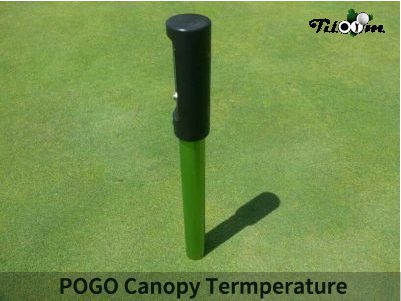
The canopy temperature, or leaf temperature is an indicator of the heat stress of the turf. It is influenced by the temperature soil, which in turn depends on VWC. The value of electroconductivity has an impact on temperature, as its value influences how water is used by the plant. Furthermore, in situations of high relative air humidity, the evapotranspiration is hindered, resulting in less natural cooling and therefore higher leaf temperatures.

The greens of C3 varieties on the other hand have ideal temperature ranges for leaf growth between 18 and 24°C, however during periods with daytime temperatures above 35°C and nighttime temperatures above 25°C the "Summer Bentgrass Decline" occurs, Huang. B et al.
In general, if moisture/air balance management is optimal, heat stress will decrease. If humidity is maintained at higher than optimal levels, direct temperature stress levels such as scorching, discolourations, unerect growth, leaf stiffness leading to a decline situation, and even higher disease incidence are very likely to occur, as most of the plants will be more susceptible to the effects of temperature stress. fungal diseases occur with high moisture content. If salts are also added and the salt content is higher than optimal, it is more difficult to obtain the water resource.
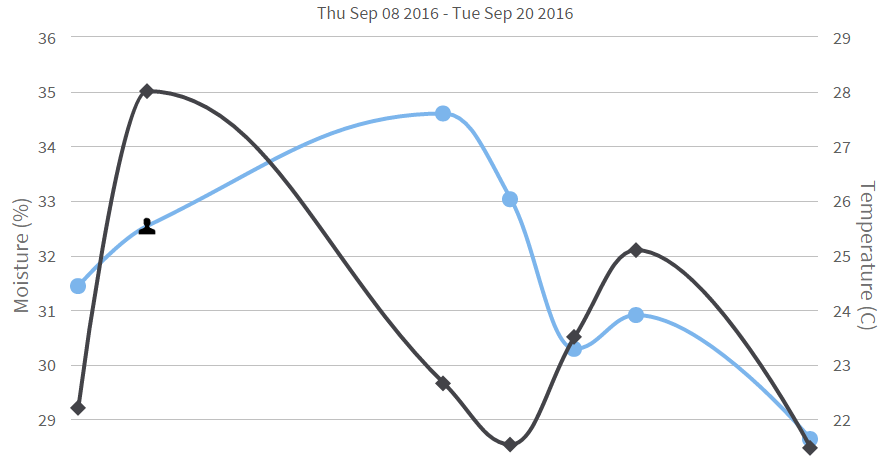
While it is not possible to modify temperature changes quickly, you could check in the medium term use of POGO that optimal management of moisture and EC parameters leads to more uniform temperature conditions, giving you better control over the physiological state of your turf.
It is also interesting to see how the effects of shading affect the temperature in, for example, a field of football.

Get your POGO at :
 Español Español
  English (UK)
 Português
 Français
 Italiano
 Deutsch
 العربية