

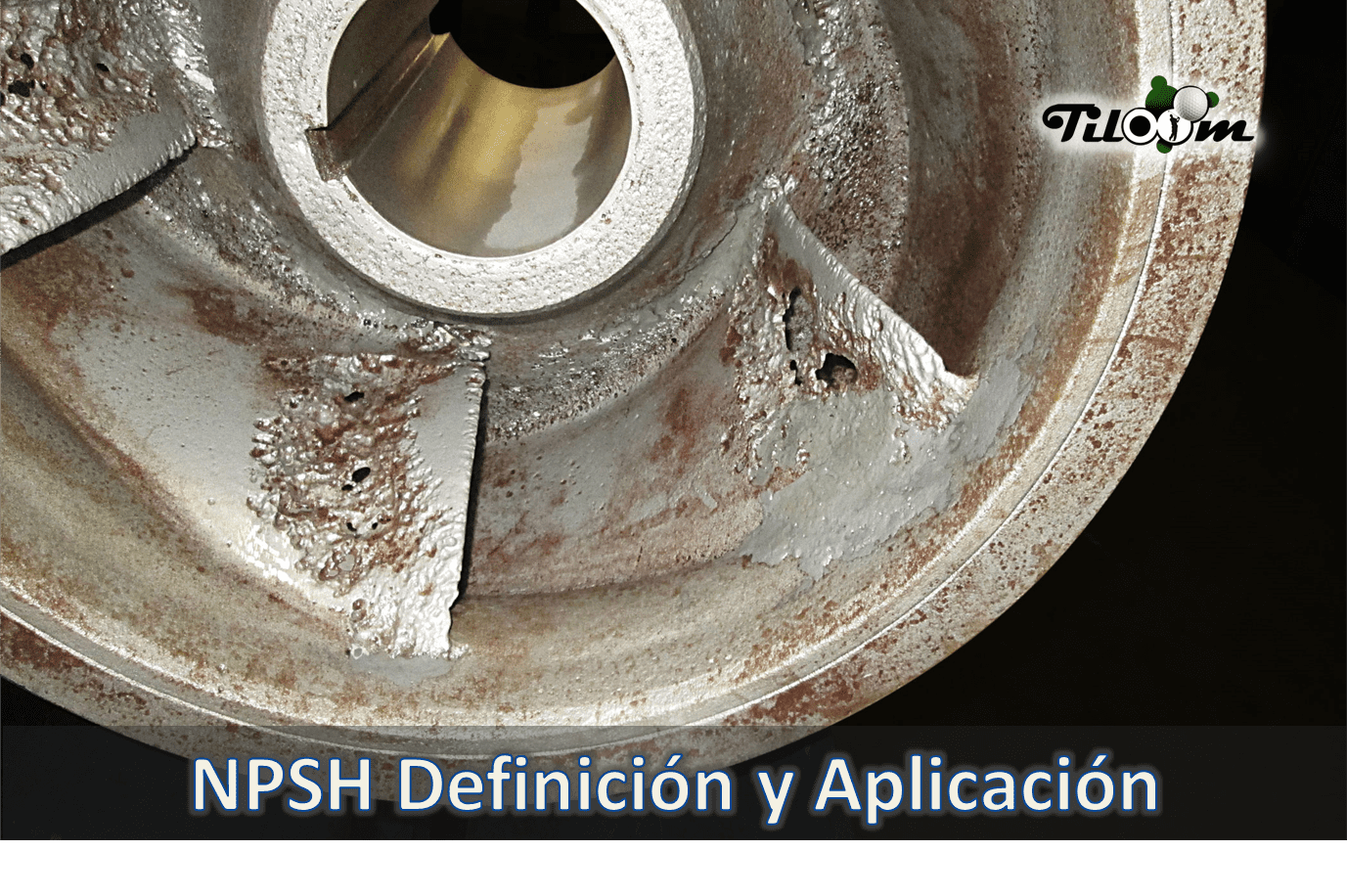
The NPSH pumping is a fluid physics concept that stands for "...".Net positive suction head"which translates as net positive suction lift. There are two NPSH different, the available and the required.
This pump variable is the one that determines the proper functioning of the pump and represents the minimum pressure required at the pump inlet to avoid the pump's pumping phenomenon. cavitation which was discussed in depth in a previous post.
In short, underpressure at the suction side of a pump can cause water to boil at low temperature, turning into steam. When the pressure increases at the impeller outlet, the vapour bubbles implode, releasing high energy which erodes the impellers of the equipment very intensely, rapidly reducing the lifetime of the instruments.
-NPSH available:
The NPSHa "available" is calculated as the pressure right at the pump inlet, it can be measured with a pressure gauge placed on the suction side or with remote measurement systems like Regometter. It depends on different factors such as:
NPSHa=Hs+Ha-Hvp-Hf
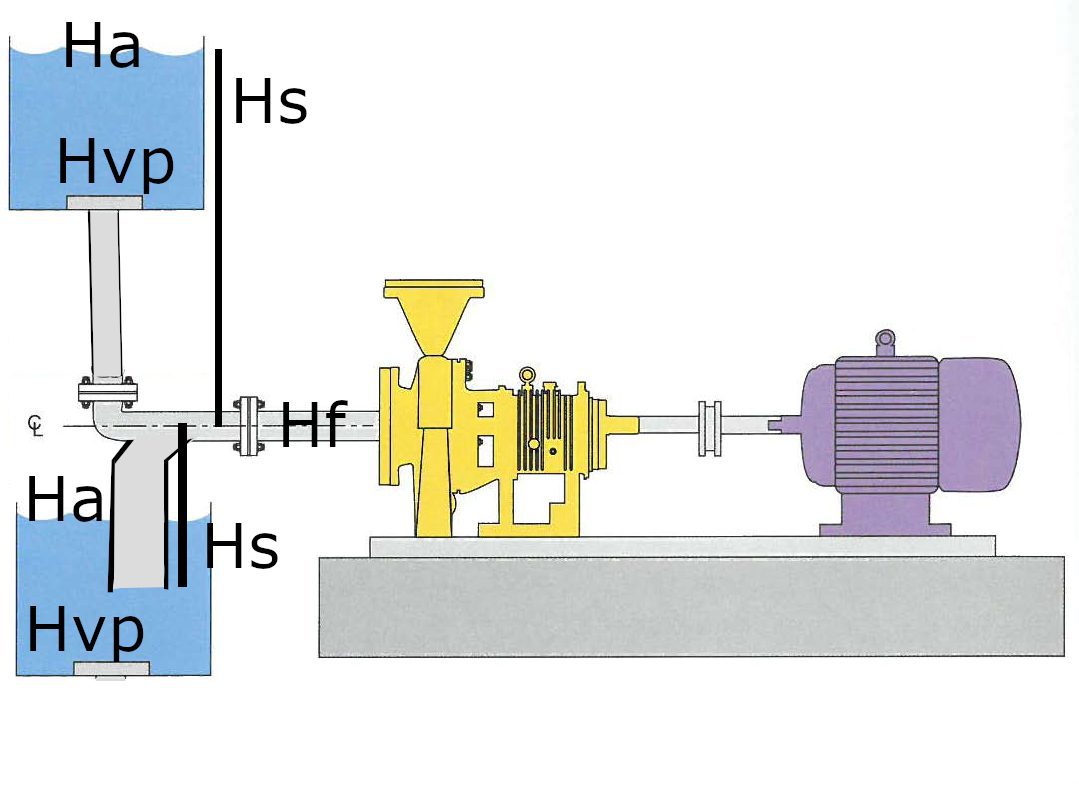
If the design is adequate, there should be no problems, as the whole system should be designed so that the pump inlet pressure never drops below 1 metre of water column. In irrigation systems with a design problem, it is very difficult to fight against a very low available NPSH, as it would be necessary to carry out a work such as:
NPSH required:
The "required" NPSHr is the minimum pressure that must be present at the pump inlet to protect the pump from cavitation. The way to know the NPSHr of the pump is given by the pump curve. Each manufacturer's model has its own.
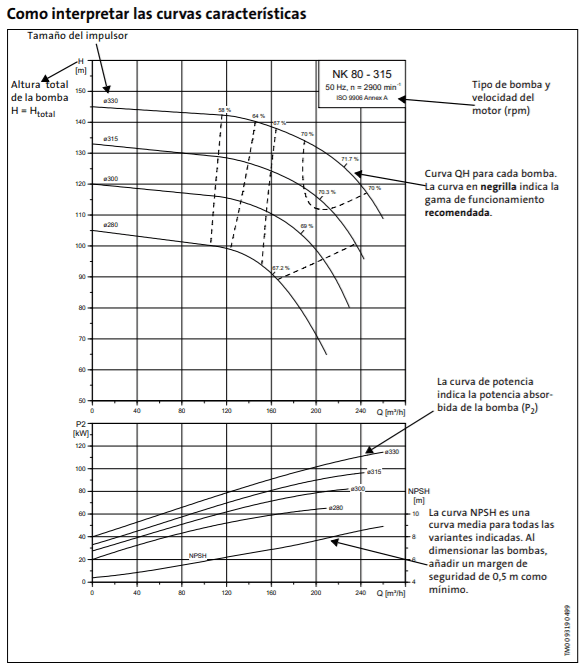
Specifically, for the system to work perfectly and to avoid cavitation, the NPSHd must be greater than the NPSHr and if possible, its margin must be one metre.
NPSHd>NPSHr
An incredibly useful method to know the pressure at the pumping inlet, as well as any other monitorable system variable such as energy consumption, flow rates or water quality variables such as electroconductivity, turbidity, ORP or pH is our Regometer monitoring system.
 Español Español
  English (UK)
 Português
 Français
 Italiano
 Deutsch
 العربية






6 responses
All very interesting, but they don't show how to calculate the NPSHavailable in a deaerator, for example. It would be interesting to give a developed example. Thank you
Thank you very much for your question. In this article we are talking about liquid centrifugal pumps. The use of degassers normally occurs in thermal power plants and is not a subject that concerns us.
I went into the article exclusively to see how the manufacturer calculates the required net positive suction lift. But it does not explain any of that. It only shows the family of curves without explaining how they are obtained. Nowhere is it explained. What is the reason for the negative?
The article is aimed at users who do not know how to read the characteristic curve of a pump and shows how to perform the calculation.
My query is as follows:
There are 1-1.5 m between the water surface and the pump eye. How deep can I go with my suction point, 7 metres or more; how can I calculate this?
How do you calculate the "Maximum Suction Head" of a pump drawing from a closed tank under vacuum and with Negative Suction? is it feasible?