
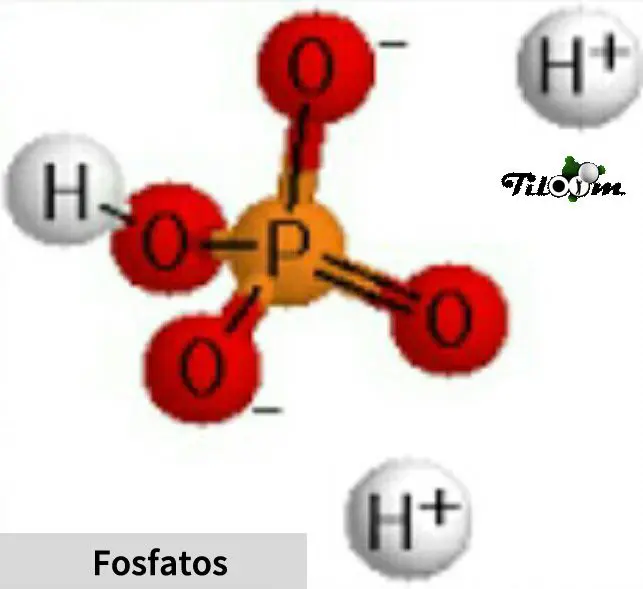
Plants only absorb the phosphorus that is in the soil solution, i.e. orthophosphate ions, i.e. in the form of HPO4¯² in neutral soils and H2PO4¯¹ in acid soils; its availability is reduced at basic pH and the phosphorus is present as PO4¯³. In very acid soils with pH less than 5 and with high concentrations of Iron or Aluminium insoluble complexes are formed:
Al or Fe + H2PO4¯ + 2 H2O ⇐⇒ 2 H + Al(OH)2H2PO4 or [Fe(OH)H2PO4].
In alkaline soils, with pH above 7.5, calcium forms insoluble complexes with phosphorus such as CaHPO4. It is therefore very important to monitor the pH, especially, for example, during replanting when phosphorus inputs are so vital. It should therefore be ensured that the pH is maintained in a range between 5.5 and 6.5, in addition to controlling iron levels at these times and opting for iron applications in mature turf situations.
The best measure of pH is that which is carried out in situ, as soil respiration affects this measurement, and if the soil sample is extracted, the measurement does not take into account the Edaphic CO2The reading will therefore not be accurate. Tiloom offers pH meters for on-site and continuous measurements.

In nature there are numerous minerals of the phosphate group (about 250), although phosphate rocks are mainly made up of apatite, which has at least three forms depending on the anion present: fluorapatite, chlorapatite and hydroxyapatite, and is normally found in deposits called phosphorite or phosphate rock. The natural phosphorus fertility potential of soils depends on the amount of apatite present.
The phosphorus cycle differs from those of carbon, nitrogen and sulphur in one main respect: it does not form volatile compounds and therefore has no capacity to move through the atmosphere.
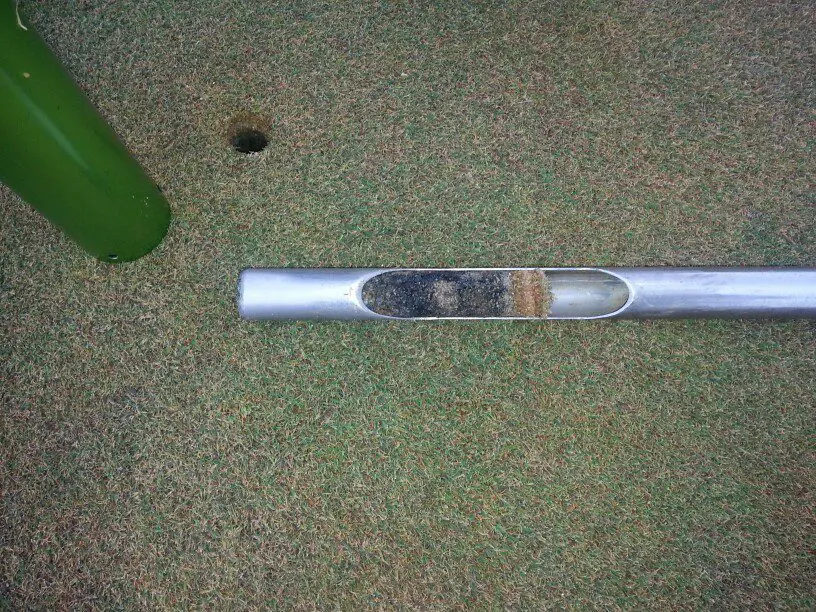
With high concentrations of iron, after pricking and aeration, phosphorus very often precipitates as iron phosphate, which will change to ferrous phosphate when the soil starts to compact and oxygen starts to disappear. Prolonged periods of time without aeration lead to anaerobic conditions and this is when hydrogen sulphide is produced and iron sulphide precipitates.black layer".
Phosphate fertilisers include the following: ground phosphate rock, basic slag (a by-product of iron and steel manufacturing), superphosphate (which is produced by treating phosphate rock with phosphoric acid), and mono- and diammonium phosphate (MAPA and DAP). The basic raw materials are: phosphate rock, sulphuric acid (which is usually produced on site with elemental sulphur) and water.
 Español Español
  English (UK)
 Português
 Français
 Italiano
 Deutsch
 العربية