
The iron is an essential nutrient for the production of our turfgrasses, it plays a fundamental role in the photosynthesis (although it is not a structural part of the chlorophyll molecule, it is involved in its manufracturing), but there are also other properties that we will explain below.
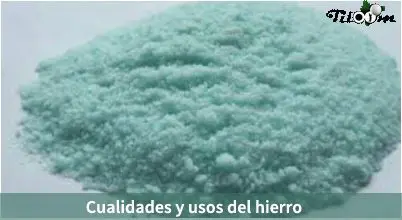
Iron sulphate is commonly used as a soil amendment to lower the pH of the soil, and among its beneficial effects is the reduction of earthworms, although its herbicidal properties are also notable for its herbicidal properties on mosses and broadleaf weeds, while at the same time promoting grass growth. Another favourable characteristic is hardening and greening, especially in autumn and winter.
Nitrogen stimulates rapid growth, undesirable for autumn and winter because of the risk of diseases such as fungal diseases. Microdochium nivale or frost damage, however, iron generates resistance to frost damage.

Iron can be in mineral form in fertiliser formulations or chelated. Chelated forms are organic molecules that make the chelated element, in this case iron, more soluble and easier to take up by the roots. Thus, EDDHA is considered one of the most stable chelates within the widest pH ranges.
Ferrous sulphate has an important role in moss control, as a broadleaf herbicide and earthworm control. This molecule inonises into Fe+2 and SO4-2, the sulphates combine with hydrogen ions from the water to form sulphuric acid with a consequent drop in pH. The burning effect on the leaf area of the moss is due to the fact that the moss has no real roots and all absorption is carried out by foliar absorption, producing toxicity in the application of this ferrous sulphate, while the burning on broad-leaved weeds is only transitory due to the presence of roots and their regenerative activity as rhizomes, stolons and resprouts from the roots. Irrigation after the use of ferrous sulphate is recommended because of its ability to burn down the grass.
 Español Español
  English (UK)
 Português
 Français
 Italiano
 Deutsch
 العربية