
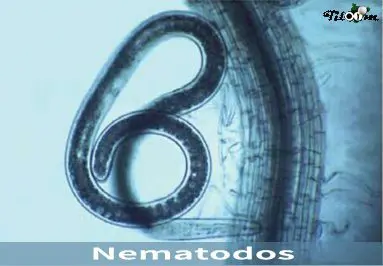
The nematodes are microscopic worms, with a life cycle of about one month, found in water, soil, animals and plants, both parasitic and saprophytic.
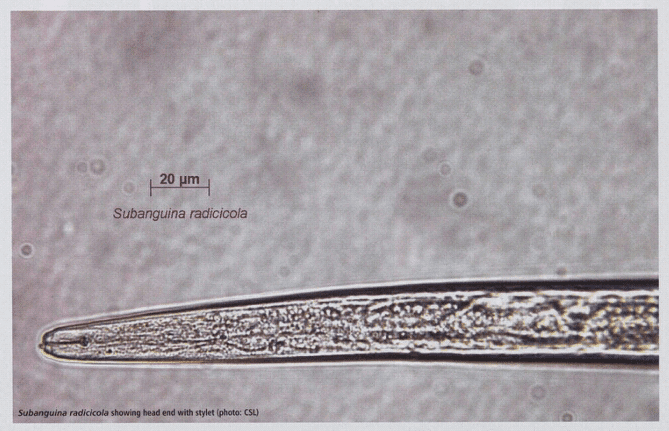
Saprophytes aid the decomposition of organic matter and indicate fertility. Others feed on insects and their larvae, and are used in biological control, such as those of the genus Heterorhabditis and Steinernema. And then there are those that cause damage to our lawns, such as Pratylenchus, Meloidogyme, etc. Thus we have different threshold limits for different species per 100cc of soil:

Toxicity in increasing order of danger is as follows: Pin;Ring<Cyst;Sheath;Lesion;Stubby-root;Dagger;Stunt;Spiral<Root-knot;Lance;Sting
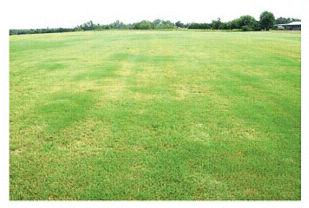
Nematode populations fluctuate seasonally, although growth peaks occur in spring and autumn, because when conditions are optimal for the plants, they are also optimal for the nematodes. Damage occurs at the roots and symptoms will be similar to those of water or nutritional stress.
Chemical treatment involves the use of either systemic nematicides (absorbed and distributed throughout the plant) such as Fenamiphos (Nemacur), which is very effective against ecto-endoparasites, or other treatments such as those based on Ethoprop (Mocap), which are not translocated through the plant.
Of particular note is the research work carried out by Dr Kate Entwistle of the Turf Disease Centre in the UK, which Tiloom uses for its plant pathology consultancy.
 Español Español
  English (UK)
 Português
 Français
 Italiano
 Deutsch
 العربية