
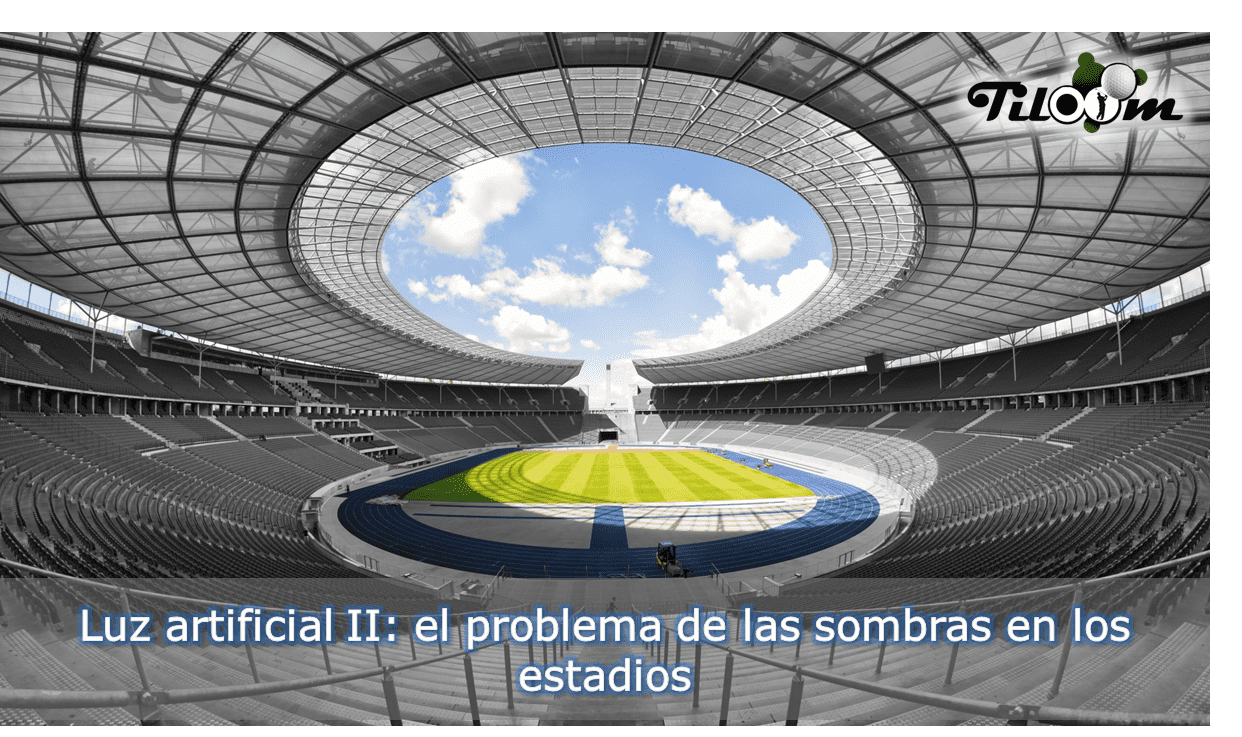
In recent decades, sports stadiums have evolved from small open pavilions that could hold little more than a thousand people, to huge colossal stadiums with a seating capacity of more than ninety thousand people. This extraordinary change in architecture has led to agronomic problems. The most important of these is the lack of sufficient sunlight falling on the surface of the land.
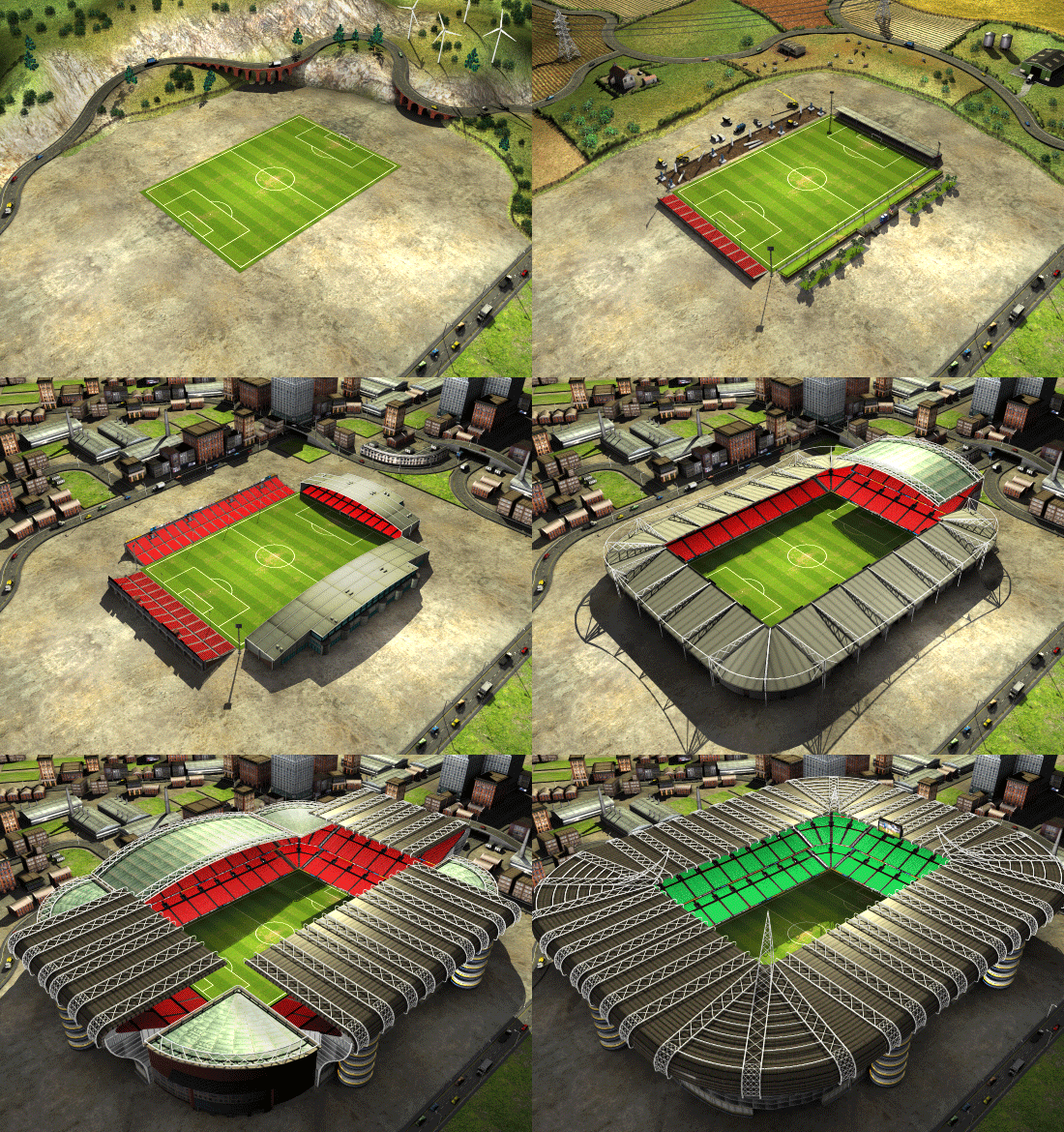
The high stands surrounding the stadium create shadows and, while it is true that they move throughout the day, the amount of light the vegetation surface receives is sometimes really small.
In situations of low light availability, the grass does not have the radiation needed for photosynthesis and changes its growth habits in an attempt to seek light, narrowing and lengthening the leaf blade and reducing the density and length of the roots, resulting in a weak turfgrass.

The solution to this new situation was to implement artificial lighting in the stadiums, but the existing technology was not adequate. It did not radiate the necessary frequencies for the correct growth of the grass, until the advent of LEDs, which made it possible to manufacture luminaires with emission spectra specifically designed to meet the lighting needs of the plant cover.
 Español Español
  English (UK)
 Português
 Français
 Italiano
 Deutsch
 العربية