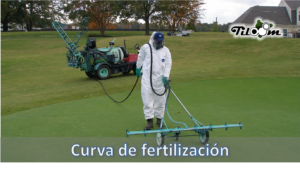

We have already explained in previous posts the concept of the organic matterThe problems caused by their accumulation and the options for their management. In addition, we also know today the impact on the gameplay . Over-fertilisation in some cases or under-fertilisation in others, or mineralisation in others is the cause of that accumulation, the right balance is needed.
The classic methods of hollow pruning, hoeing or scarifying do remove organic matter or dissolve it, but they also have the disadvantage of deteriorating and conditioning the state of the field for a few days.
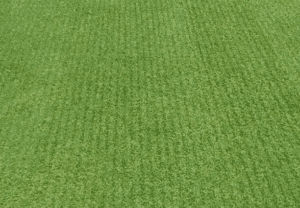
The microbiome of our greens or courses football tells us a lot about this balance. The pH is an important parameter for this, and we have found that very acidic football pitches around pH 5.5 have a lower presence of actinomycetes, bacteria responsible for the decomposition of organic matter and the formation of humus. In other words, we must therefore ensure a pH value of around 6.8 so that the microbiome is richer. As we have explained on previous occasions, the health of our lawn will be a consequence of many agronomic parameters that are not always easy or possible to control, however today, we are pleased to have solutions that will help us to move that balance to our side.
Products have been successfully developed that reduce excess organic matter through changes in the soil atmosphere.
OxyTurf is an essential tool in a greenkeeper's or groundsman's arsenal for non-aggressively combating anaerobic conditionsprovoking:
Professionals of the stature of Vilaen Pillay, Head Groundsman at Kings Park, South Africa or Tiago Piano, Superintendent at Belas Golf Course, Lisbon, among many other countries, accredit its use.

One of the most important features of the aeration biochemistry of OxyTurf is its medium term impact with the catalase type reaction observed in the trials. OxyTurf was developed with a proprietary base of plant extracts to increase aerobic conditions in the soil profile by stimulating microbial stimulation of the natural decomposition of excess organic matter. The action of the product allows aerobic bacteria and positive, balanced microdigestive organisms to perform their natural aerobic digestive processes in the soil. Some of the bacteria release enzymes that catalyse the production of oxygen by breaking down various organic compounds in the soil that contain oxygen.
OxyTurf can be widely recommended with a first shock dose of 40 litres per hectare and a monthly dose of 20 litres to provide a constant reduction of organic matter and thatch.
You can learn more about OxyTurf and its biochemical technology by contacting us at soporte@tiloom.com.
 Español Español
  English (UK)
 Português
 Français
 Italiano
 Deutsch
 العربية