

The microbiological tests are those that provide information on the microbiological diversity of the soil.
This diversity is comprised of :
1. Living organisms as Bacteria (unicellular) and Archaea (unicellular), both prokaryotic organisms (undifferentiated nuclei), and on the other hand eukaryotic organisms (with differentiated nuclei) such as Algae (unicellular or multicellular), Protozoa (unicellular or multicellular), Protozoa (unicellular), Fungi (unicellular or multicellular) and Helminths (multicellular parasites).

2. Non-living infectious agentssuch as viruses, viroids and prions.
The study methods are differentiated through applicable cultivation-dependent techniques.
Thus, we can talk about plate isolation, MPN, selective media...

Or independent cultivation techniques, DNA/RNA-based studies, molecular identification (DNA sequencing), microbiological quantification (qPCR)...
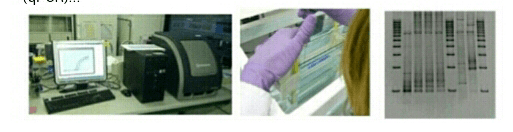
The most common analyses offered are those of microbial communities of total Eubacteria, Archaea and Fungi.
Microbiological testing in the practice of golf course maintenance:
Results on putting greens are around 10*10 <8 CFU bacteria/gram soil.
More information: Basal Edaphic respiration
There are other indirect methods for the determination of the microbial mass as a whole, determined by means of the Basal Soil RespirationThe total microbial population is estimated by CO2 release from a soil sample incubated under pre-set temperature and humidity conditions. The respiration of the microbial mass will be used for correlation with the total microbial mass. It will be a quantitative determination, not a qualitative one.. Results on greens have been given at around 0.20 +- 0.05 mg C-CO2/Kg-hour, indicating that we are dealing with a low microbial load, compared to agricultural soils..
 Español Español
  English (UK)
 Português
 Français
 Italiano
 Deutsch
 العربية