

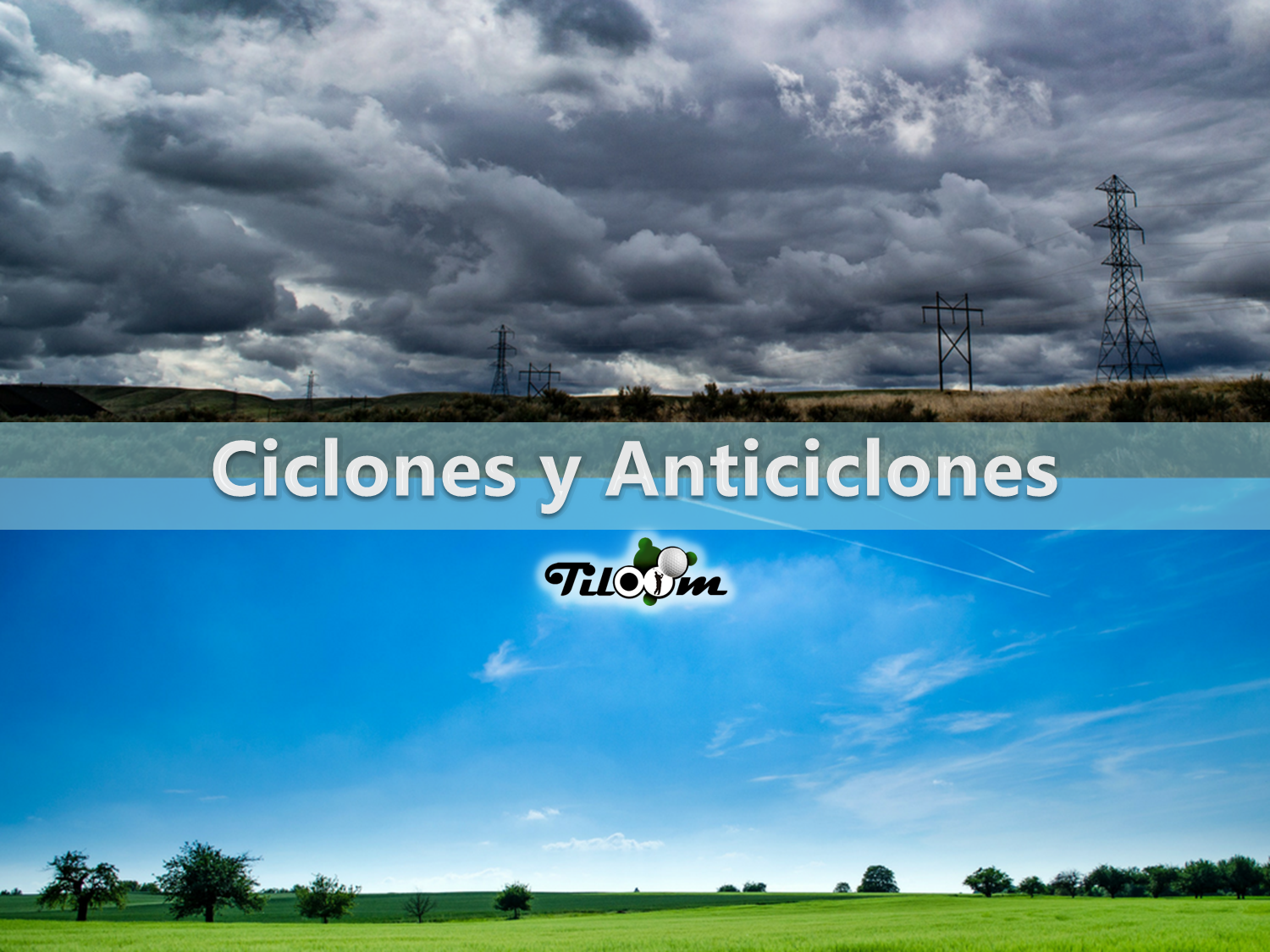
Cyclones refer to intense winds accompanied by storms or areas of low atmospheric pressure (squalls), which have been present in Spain for several weeks, which is why the much-desired summer weather has not arrived. The opposite of these squalls are anticyclones, characterised by clear skies and good weather.
But how are these two processes formed?
The rotation of the earth causes the wind to curve, it is the Coriolis effect. The wind from the northern hemisphere bends to the right and the wind from the southern hemisphere bends to the left. In this way, we will call cyclonic flow when the wind curves counterclockwise in the northern hemisphere and clockwise in the southern hemisphere, being counterclockwise in the northern hemisphere and counterclockwise in the southern hemisphere, being contrary to its natural curve (which can form large cyclones known as hurricanes); and anticyclonic when it curves in its normal direction, clockwise in the northern hemisphere and counterclockwise in the southern hemisphere.
Atmospheric pressure is a fundamental factor in meteorological processes, as its temporal variations, both vertical and horizontal, can define phenomena that affect weather and climate (source: Jose Antonio Perez Bonalde). Thus they are distinguished:
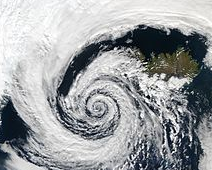
A high-pressure area is an area of the atmosphere where the pressure is high relative to that of the surrounding region at the same level. It is always associated with anticyclonic circulation (clockwise in the Northern Hemisphere), so it is basically the same as an anticyclone. Anticyclones are generally associated with good weather conditions. It can also be said that high pressure is a kind of fan, because it "blows wind".
Having a weather station is the perfect tool to know both the environmental humidity and all the variables necessary for a proper management of the field.
 Español Español
  English (UK)
 Português
 Français
 Italiano
 Deutsch
 العربية


One Response
thank you very much!!!! the best explanation