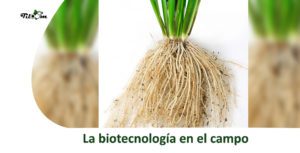


Integrated Microbial Management (IMM) in turfgrass aims at balancing the rhizosphere volume, the area around the root, as a priority. Soil is the storehouse and support of turf. Nutrients, water, soil atmosphere and biota coexist and interact in complex symbiotic systems. Anthropogenic action breaks down many of these systems, impoverishing the soil, and so Integrated Microbial Management has been developed to re-establish them.
Of all soil micro-organisms there are two distinct types: The oxidative ones, whose effects are harmful, such as the mushrooms plant pathogens and anti-oxidatives that bring benefits to the plant, such as the mycorrhizae or the trichodermas. Microbiology survives in a delicate balance and human intervention causes opportunistic micro-organisms, almost always oxidative, to take control of the turf and dominate causing disease. Our aim in the agronomic management is to increase the fungus-to-bacteria ratio of our rhizosphere.

Turfgrass management behaves like a monoculture, reducing its biodiversity and resistance to stress. Add to this the impact of intensive fertilisation, pesticide application, and symbiotic micro-organisms are largely neglected, so their efficient inoculation is vital to improve and provide a better more efficient and sustainable management. Fertiliser needs to be applied in an intelligent way, for this we offer the best fertiliser technology. nutrition foliar, where the content in Biuret is minimal.

Biostimulant products are the backbone of Integrated Microbial Management. They include inoculants of selected microorganisms such as mycorrhizae, trichodermas or endophytic mixtures that restore the rhizosphere. Also the use of soil biostimulants that provide amino acids, sugars or mixtures that generate a more favourable environment such as the seaweed extracts are synergistic forms of action. Not forgetting a efficient organic matter management through the application of plant extracts and appropriate use of fertilisation. The combination of the two reduces the importance of pathogenic micro-organisms, reducing the impact of diseases and favouring the turf's access to nutrients.

Did you find this interesting? Do you want to know more about Integrated Microbial Management? Write to us at info@tiloom.com.
 Español Español
  English (UK)
 Português
 Français
 Italiano
 Deutsch
 العربية