


The geographic information systems or GIS (GIS), are organised collections of hardware, software and geographic data designed for the efficient capture, storage, integration, updating, modification, analysis and display of all types of geographically referenced information (ESRI, 1993). They are based on associations between a Cartographic Database with an Alphanumeric Database. These associations are made by means of GEOCODIFICATION, which consists of linking alphanumeric data to geographical coordinates or cartographic elements (such as a golf course fairway, a green, a golf course chambers, etc.). irrigation, ..)
The most prominent GISs include the following:
Esri with ArcInfo, Arcview, ArcCad, ArcGis, Erdas, Idrisi and the Spanish gvSIG. Almost all of these have the cost of a licence plus the difficulty of using them with extensive manuals and the need to use topographic tools such as GPS, etc.

The tool POGO is in itself a geographic information system, where in addition to using the utilities of any GIS (combining vector and raster data typical of these softwares), it incorporates state-of-the-art measurement sensors designed for the sports surfaces such as sub-metric GPS, temperature, salt index, electroconductivity or volumetric humidity percentage sensors. It allows the location of sprinklers and their irrigation coverage to study their efficiency.
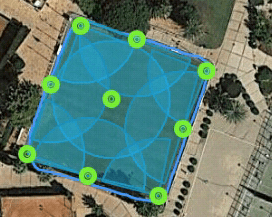
Generation of laboratory analysis of soil, leaf and water with discharge on the platform itself.

In addition to being continuously evolving, the latest implementations also provide statistics, historical flag positions to minimise the use of the same trampling zones, etc.

Don't be left behind in the latest innovations in the service of agronomy, call Tiloom now, we are here to give you the best advice.
 Español Español
  English (UK)
 Português
 Français
 Italiano
 Deutsch
 العربية