

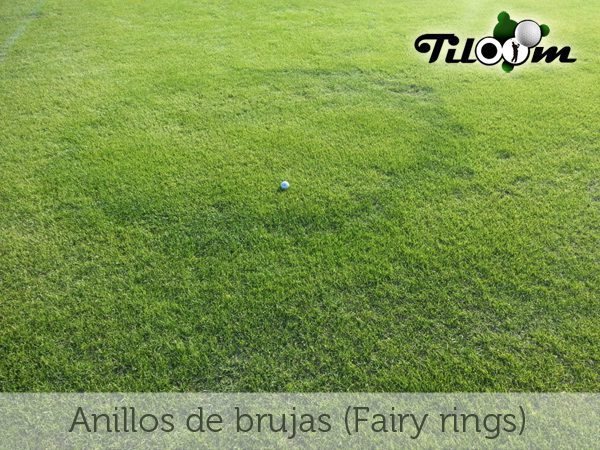
The causative agents of this disease are Chlorophyllum, Marasmius, Lepiota, Agaricus, Amanita, Licoperdon, Calvatia, and others basidiomycetes.
It generally occurs on very organic and not very fertile soils. The fungus lives thanks to the decomposition that it produces in the "mattress or thatch. The Lycoperdon can be developed on greens constructed with 100 % of sand. It is more frequently observed in the summer months, due to the coincidence of high temperatures and humidity due to the irrigation.
On the other hand, the inner zone of the rings is losing density due to the loss of nutrients and the creation of a hydrophobic zone due to fungal tissue.
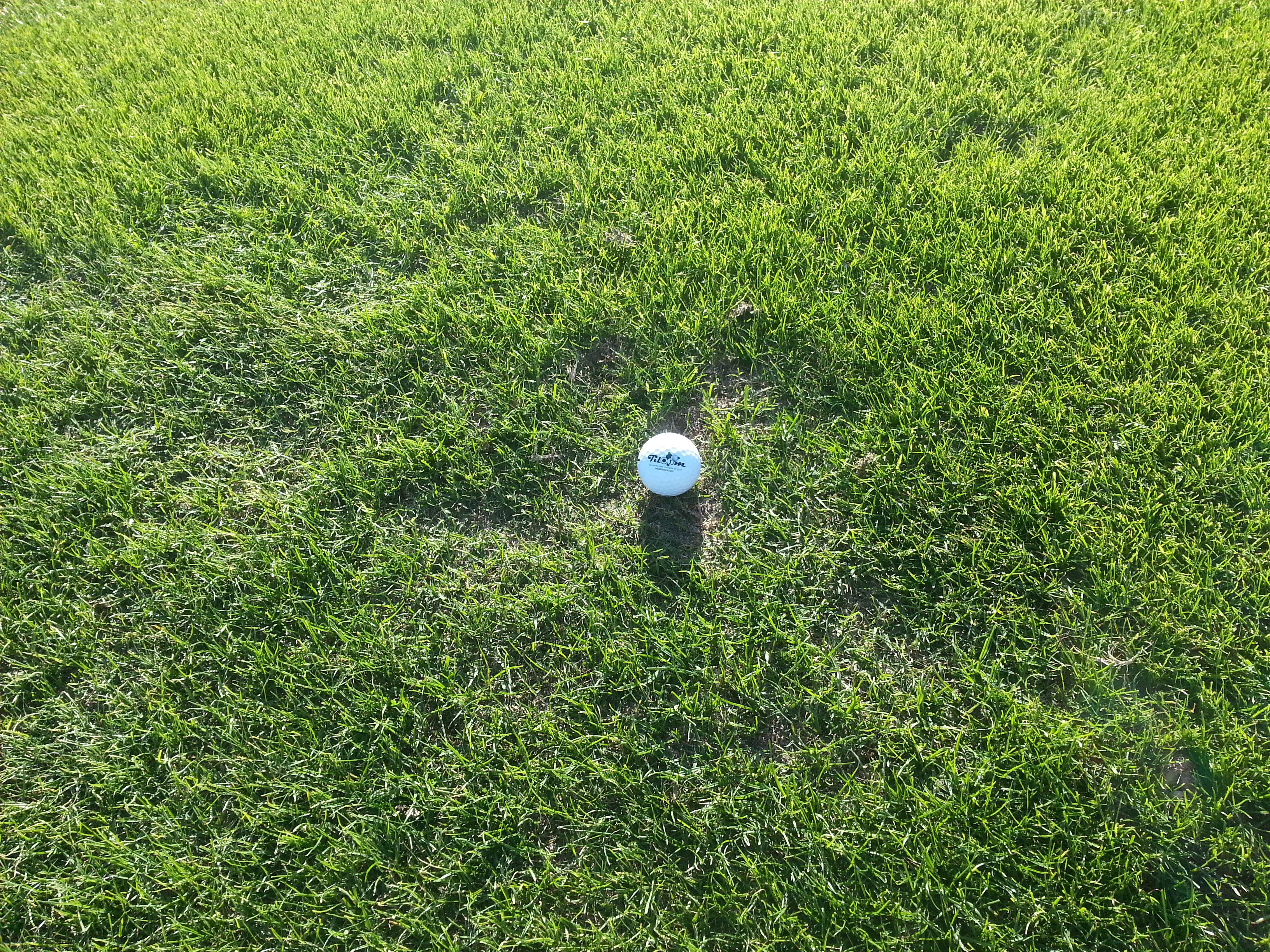
There are both surface witch rings, which are present in the thatch and upper soil profile, which are generally less harmful. On the other hand, the edaphic ones, with the presence of mushrooms, are more dangerous due to the loss of turf they cause, as well as the intense hydrophobia they provoke.
The chemical control involves the use of fungicides such as flutolanil or azoxystrobin.
 Español Español
  English (UK)
 Português
 Français
 Italiano
 Deutsch
 العربية


2 responses
I have one in my garden. Is it harmful or harmless? It looks nice
They are not harmful to the average garden, but they can be removed and treated with good practices.