
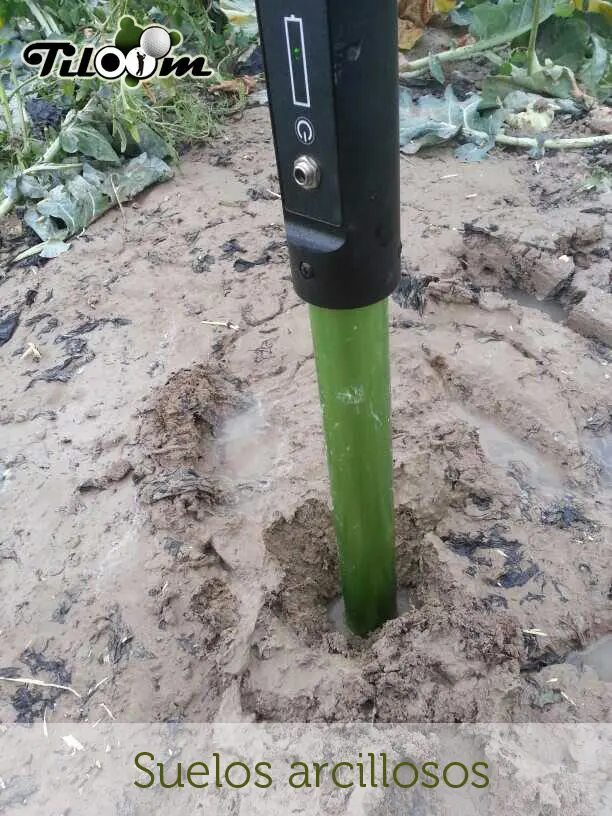
Determining the texture and particle size of our soil will give us the criteria for its classification, and it can be categorised as sandy, loamy, clayey or loam.
We need to know how soils are divided by particle size. Here is a summary:
The textures are determined by the different relative fractions of sand, silt and clay.
The smaller the particles are, the more reactive they are, therefore, the higher the clay content is the determining feature in the physical and chemical behaviour of our soilboth in clay soils as well as loamy soils.
It is not only the amount of clay in our soil that is important, but also the type of clay present.
Soil clay types and cation exchange capacity (CEC)
Clay minerals consist of two basic units, an octahedral unit with Aluminium and a tetrahedral unit with Silicon, which are held together in parallel sheets, giving rise to the different minerals. Thus the Kaolinite is formed by the union of an octahedral and an octahedral sheet, it is a 1:1 mineral.
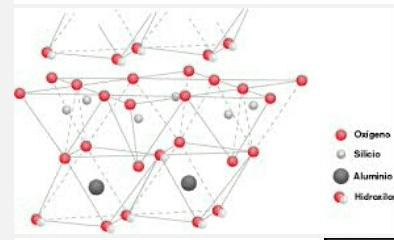
The formation of two tetrahedral and one octahedral unit, i.e. of the 2:1 type, gives rise to minerals such as vermiculite or micas (illites), and it is the type of bonding between the units that differentiates one mineral from another.
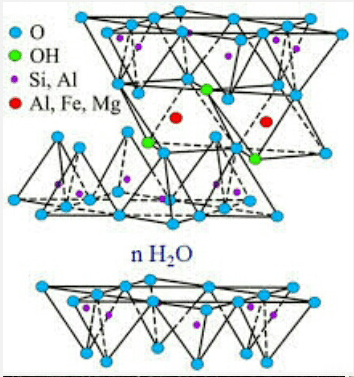
These minerals have suffered isomorphic substitutionswhich consist of the substitution of some Aluminium or Silicon ions for others of lower charge or valence such as Iron, Zinc or Magnesium, unbalancing the neutral balance and giving rise to negative charges, the origin of the cation exchange capacity of the soils, both in clay soils and in free soils.
In these clay minerals, they can undergo these so-called isomorphic substitutions. As mentioned above, some aluminium or silicon ions are replaced by less charged ions such as iron, zinc or magnesium. This creates negative charges in the soil, which we call cation exchange capacity (CEC). CEC is crucial because it affects how the soil retains and releases nutrients for plants.
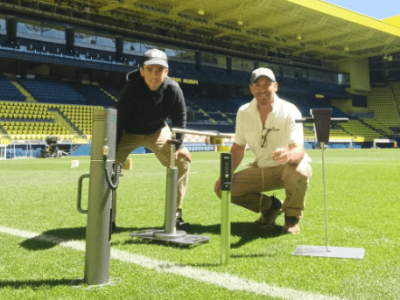
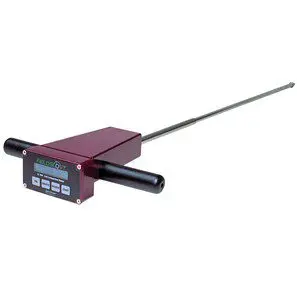
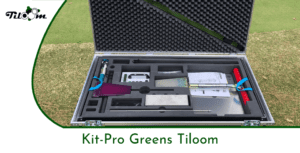
To get a better understanding of the soil, there are several tools that can help in these cases:
Do you know the structure of your floor? We recommend you to make a laboratory analysis to understand its composition.
 Español Español
  English (UK)
 Português
 Français
 Italiano
 Deutsch
 العربية