

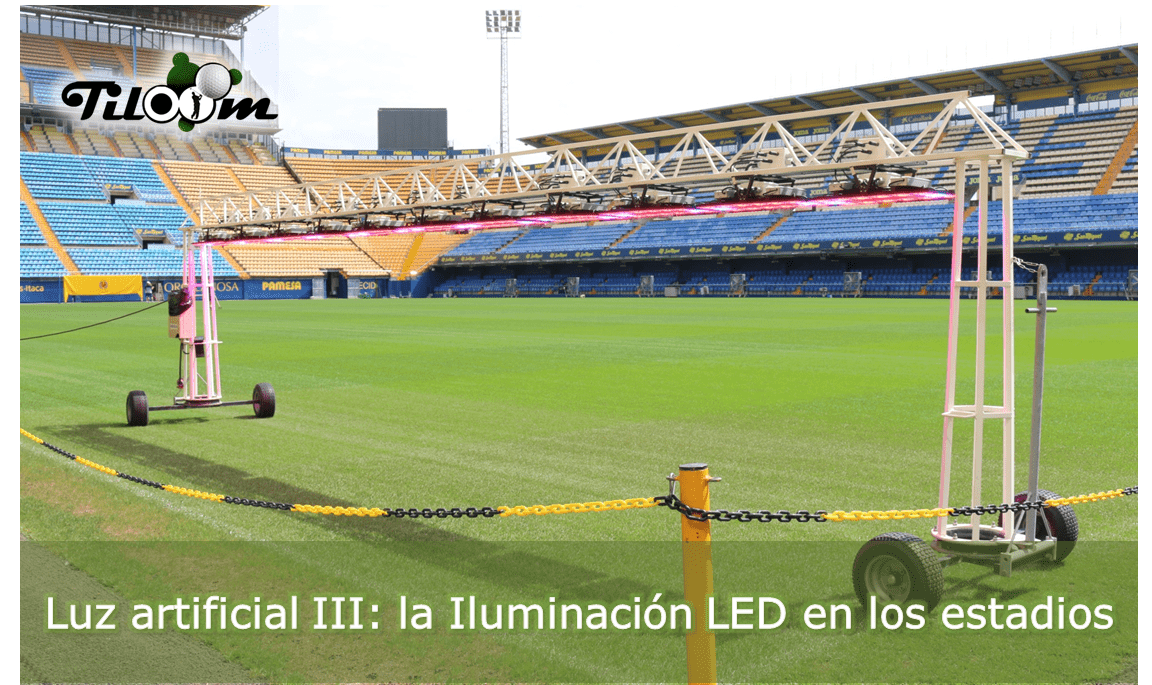
The problem of shadows in stadiums which we explained in the previous entry, "Artificial Light II"The solution can be found in LED lighting.
The installation of mobile LED screens in the longest shaded areas is a good solution and is used by many stadiums, but there is a handicap to be taken into account: LED lighting causes a strong increase in plant photosynthesis which causes the natural CO2 concentration on the pitch to decrease drastically.
The stadiums, being enclosed and with little current, make the low CO2 concentration and low gas exchange a problem for the plant.
To prevent this situation, caused by LED lighting, there are two solutions:
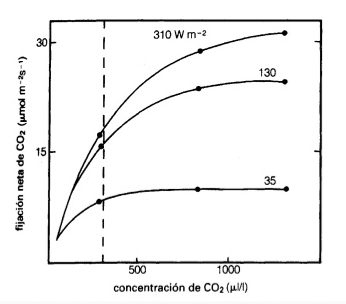
As can be seen in the graph below, the dotted line is the atmospheric CO2 concentration. With low light, CO2 fixation and growth is natural. But with increasing CO2 concentration and light intensity, the growth increases.
The principle is simple: Just install portable tents, with integrated lighting and pipes through which the CO2 is injected. The carbon fertilisation starts to take effect when the CO2 (being heavier than the air as a whole) is lowered to the height of the leaves.
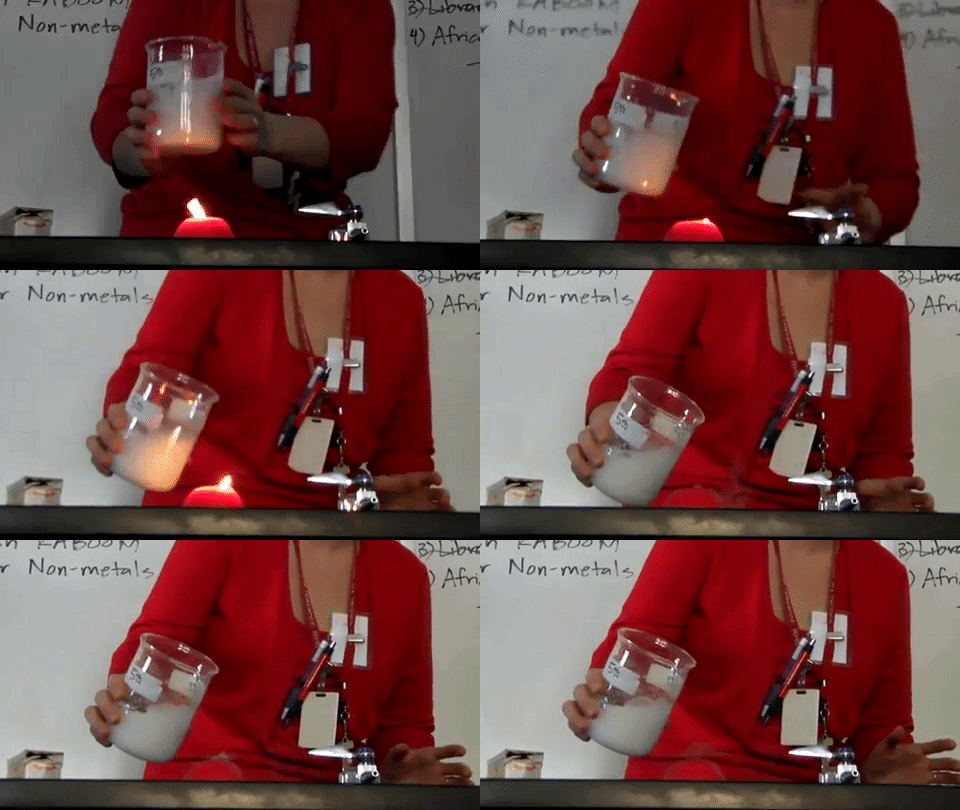
In the following video, a simple experiment explains how CO2 (produced by mixing baking soda and vinegar) can extinguish a candle, as it is heavier than air and displaces oxygen.
The levels of growth and health that can be achieved with these methods are enormous. That's why, at Tiloom, we can offer you tailor-made solutions for shady areas of your field or for areas with disease that need an extra dose of growth.
 Español Español
  English (UK)
 Português
 Français
 Italiano
 Deutsch
 العربية