
In the fascinating world of soil ecology, interactions between ectomycorrhizal (EM) fungi and saprotrophic fungi play a crucial role in the cycling of carbon and nitrogen, two essential elements for soil fertility and plant growth. These relationships, however, are not static: they are profoundly influenced by factors such as soil pH, stoichiometry (carbon-to-nitrogen ratio) and host plant identity.
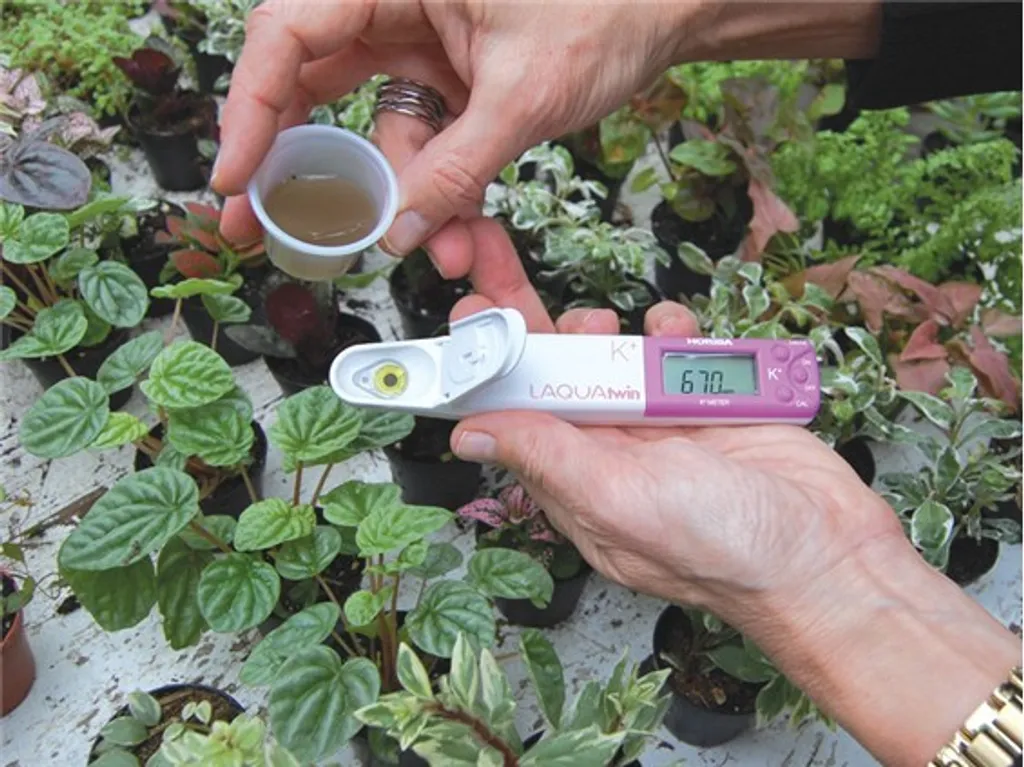
The results obtained in this trial demonstrate how technology can maximise yields in horticultural crops. 👉 Advanced solutions for Agriculture

Soil pH acts as a key mediator in the interactions between ectomycorrhizal and saprotrophic fungi, directly affecting organic matter decomposition and nutrient availability. According to a recent study (Fernandez & See, 2025; DOI: 10.1111/nph.70021), these interactions vary significantly depending on the level of soil acidity:
Acid soils (pH < 5) with Nitrogen Limitation: In very acid soils, where nitrogen is scarce, ectomycorrhizal fungi face a challenge. They can acquire mineralised nitrogen from saprotrophs or employ oxidative strategies to decompose organic matter, which accelerates decomposition rates. In addition, with a low C:N ratio, EM fungi indirectly contribute to decomposition by releasing labile carbon through the rotation of their hyphae, stimulating saprotrophic activity. This process, described as "accelerated competition or facilitation", highlights the importance of proper pH management to optimise nutrient availability.
Slightly acid soils: In soils with an intermediate pH, hydrolytic decomposition of organic nitrogen is more efficient. Here, ectomycorrhizal fungi can suppress decomposition by competing with saprotrophs for nitrogen, a phenomenon known as the "Gadgil effect". This effect can slow down decomposition, which could be beneficial or detrimental depending on the agricultural objectives, such as organic matter retention or nutrient release.
High pH soils: In higher pH soils, where inorganic nitrogen is abundant, interactions between EM and saprotrophic fungi are minimal, resulting in almost no impact on decomposition rates. This scenario is typical in nitrogen-rich systems, especially those with deciduous tree litter rich in labile nitrogen.
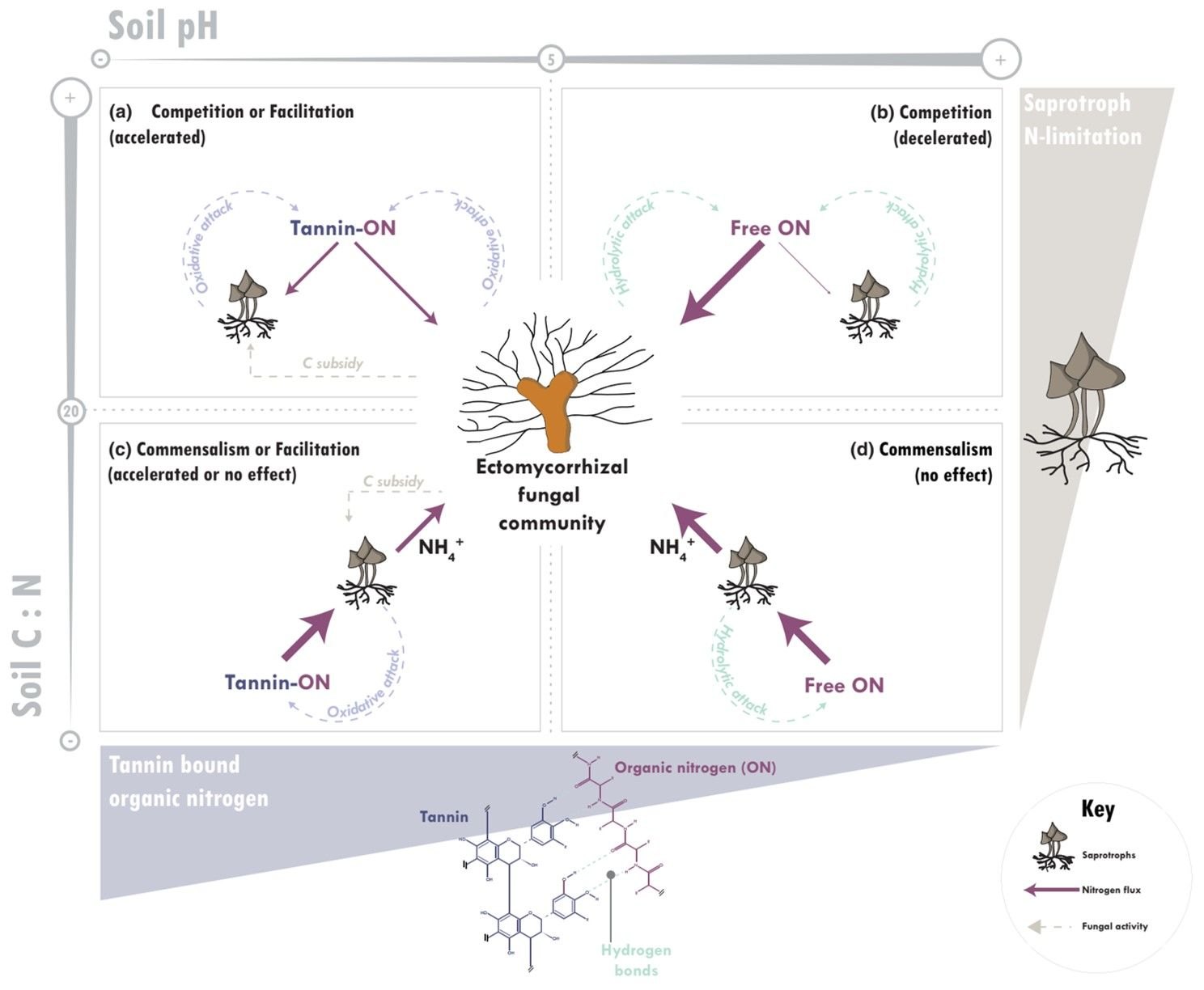
Image: effects of EM fungi on soil organic matter decomposition (Fernandez & See 2025; DOI: 10.1111/nph.70021).
Beyond pH, other factors such as the chemistry of tannins in the litter and the presence of plants with different mycorrhizal associations also influence these interactions. For example, tannins can bind organic nitrogen, affecting its availability. In acid soils, tannins bound to organic nitrogen (tannin-ON) can be oxidatively attacked by EM fungi, whereas in soils with higher pH, free organic nitrogen (free ON) is more accessible, reducing competition between fungi.
For farmers and soil managers, understanding these dynamics offers an opportunity to optimise soil fertility and improve crop productivity. Proper management of soil pH can influence the activity of EM and saprotrophic fungi, affecting the decomposition of organic matter and the release of essential nutrients such as nitrogen.
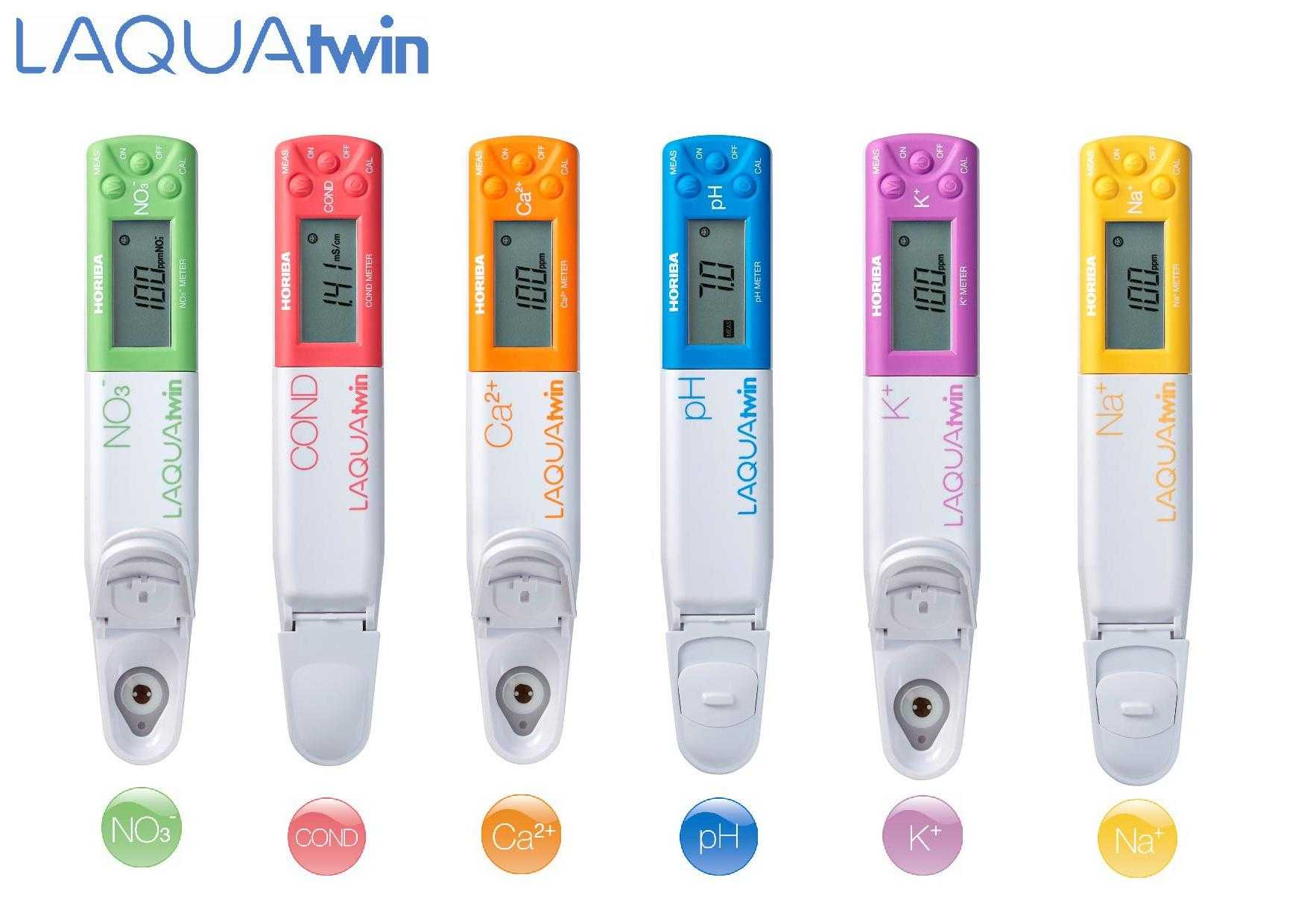
This is where tools such as the LaquaTwin ionometers, especially the LaquaTwin pH-33become indispensable. The LaquaTwin pH-33 allows you to measure soil pH quickly, accurately and portably, making it easier to make decisions in the field.
Knowing the exact pH of the soil helps farmers determine whether they need to apply amendments, such as lime to increase the pH, or to implement practices that favour the activity of certain fungi to improve nutrient cycling.
In addition, the LaquaTwin ionometers offer the advantage of measuring other key parameters, such as conductivity or ion concentration, providing a comprehensive picture of soil health.
If you want to optimise the health of your soil and find out how LaquaTwin ionometers can help you achieve your agricultural goals, do not hesitate to contact us at agro@tiloom.comWe are here to support you every step of the way towards smarter and more productive land management!
 Español Español
  English (UK)
 Português
 Français
 Italiano
 Deutsch
 العربية