Table of contents: Turfgrass Management Under Compaction and Shade Conditions: Technical Evidence for the Use of OxyTurf
Soil compaction and the lack of solar radiation are determining factors in the deterioration of the physical-biological functionality of the sandy profiles used in sports surfaces. Both conditions reduce water infiltration, gas exchange and oxygen availability to the roots, generating anaerobic environments that favour the appearance of black layer and sulphur-reducing micro-organisms.
Several trials conducted by an independent evaluator and practical experience in elite stadiums have shown that the application of OxyTurf contributes to maintaining soil porosity, aerobic microbial activity and turf quality under conditions of compaction and persistent shade.
Independent Essay
Implementing entity: Sports Turf Research Institute (STRI Group) Objective: To evaluate the influence of OxyTurf on the infiltration rate in compacted soils. Test conditions:
Soil type: sandy loam
Compaction: mechanically induced
Applied dose: 40 L/ha
Results:
Compaction was the predominant limiting factor in infiltration.
However, OxyTurf-treated plots showed an increase of less reduction in infiltration rate compared to the control, which suggests an improvement in the structural stability y functional porosity of the profile.
A less tendency to surface waterlogging y aeration maintenance in the root zone.
Conclusion of the trial: Treatment with OxyTurf does not eliminate the effects of compaction, but it does mitigates its impact on air-water exchange, contributing to the maintenance of the hydraulic and biological functionality of the soil under conditions of physical stress.
OxyTurf is a formulation designed to provide sustained oxygenation in the soil profile, by the gradual release of oxygenated compounds and the activation of beneficial biological processes.
Main mechanisms of action:
Prolonged oxygenation: releases oxygen in a controlled manner into the root environment, favouring the respiration of roots and aerobic micro-organisms.
Microbial stimulation: enhances the activity of bacteria y mushrooms aerobics, essential for the mineralisation of organic matter and the maintenance of soil structure.
Decomposition of organic matter: promotes the degradation of reducing compounds (FeS, MnS) and reduces the risk of black layer and accumulation of toxic gases (H₂S, CO₂).
This mode of action converts OxyTurf in a complementary biochemical tool to physical aeration work, especially on surfaces where mechanical access is limited or environmental conditions restrict interventions.
Field Evidence - Windsor Park, Northern Ireland
Responsible: Matt Purcell - Head Groundsman, Windsor Park (Northern Ireland Stadium) Conditions of application:
Areas with high shade, constant humidity and a history of black algae y black layer.
Implementation programme: 10-20 L/ha every 3 weeks.
Observed results:
Progressive removal of the black layer and improvement of the surface structure.
Increase in the turf density, with a more uniform and vigorous tapestry.
Mayor physiological resilience in permanently shaded areas.
Declaration of the person responsible:
“Since the introduction of OxyTurf (10-20 L/ha every three weeks), the transformation has been remarkable. The turf is looking thicker, healthier and more resilient, even in shaded areas where historically black layers developed.”
Synthesis of Results
The integration of experimental evidence (STRI Group) and practical observation (Windsor Park) allows us to establish a solid technical basis for the efficacy of OxyTurf on the management of compacted soils and shaded areas.
Main technical benefits:
Increase of the effective infiltration in compacted soils.
Maintenance of the root aeration and reduction of anaerobic stress.
Favouring the aerobic microbiology and degradation of accumulated organic matter.
Improving the density and colour of turf under limiting conditions.
Decrease of the dependence on mechanical aeration intensive.
Technical Conclusions
The use of OxyTurf is recommended as part of a integrated soil management strategy, especially in scenarios where compaction, excess moisture or prolonged shade reduce the availability of oxygen in the rhizosphere.
Its regular application contributes to:
Restore aerobic biological activity.
Optimising the air-water ratio on sandy textured soils.
Preventing the formation of reducing layers (black layer).
In high-performance sports fields, these effects translate into more stable, healthier and more durable surfaces, with increased resilience to intensive play and adverse environmental conditions.
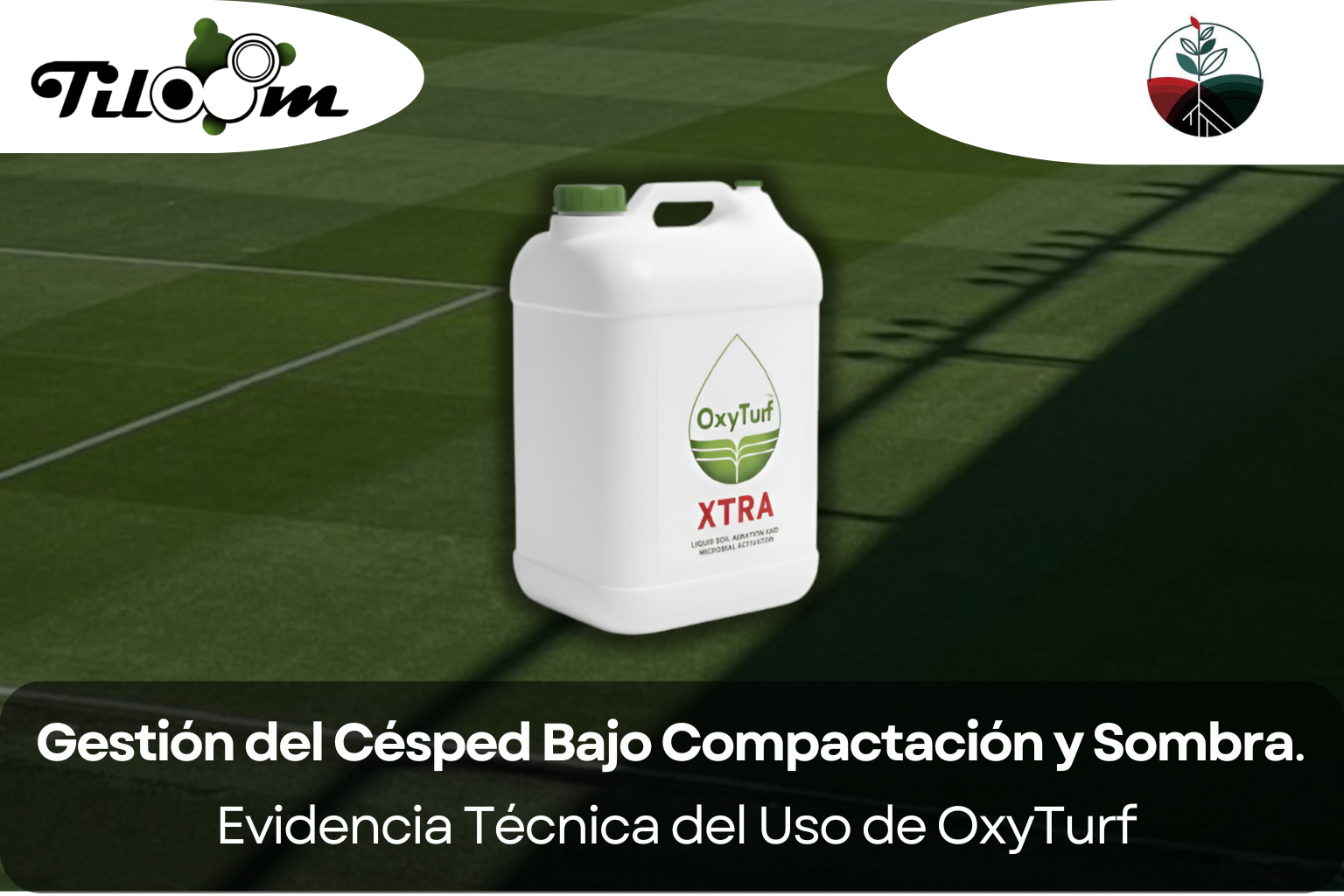
OxyTurf Xtra: 20L liquid turf aerator
OxyTurf Xtra 20L is a stabilised oxygen liquid aerator which improves root oxygenation, activates aerobic microbiology and optimises soil structure for a more resilient, high performance turf.
Foliar or ground spraying, with subsequent irrigation
Main objectives
Improved infiltration, oxygenation and degradation of organic matter
Distributor / Technical advisor
Tiloom
Micropinning and joint applications: Ninja Tines as an ally
To maximise the efficacy of these biological solutions, it is recommended that they be applied after a micropinning with Ninja Tines. This technique creates micro-channels in the turf profile that:
They facilitate the homogeneous input liquid products such as Gladiator, Ukelp and OxyTurf.
They reduce compaction without affecting the playability of the terrain.
In this way, the combination of micro-pinch and biological applications multiplies the benefits, promoting a healthier, more resilient and sustainable turf.
If you have already read Turfgrass Management Under Compaction and Shade Conditions: Technical Evidence for the Use of OxyTurf you might be interested in...
We appreciate your interest in us, so we leave you this form so that you can subscribe and have priority access to our exclusive promotions and offersideal for saving money on your purchases and keeping your sports and agricultural fields at the forefront!
In addition, we will keep you informed about the LATEST NEWS in Greens and Agriculture with the latest entries from our Greenkeepedia and Agrikipediaincluding innovations, events and interviews with experts.




 Español
  English (UK)
 Português
 Français
 Italiano
 Deutsch
 العربية