
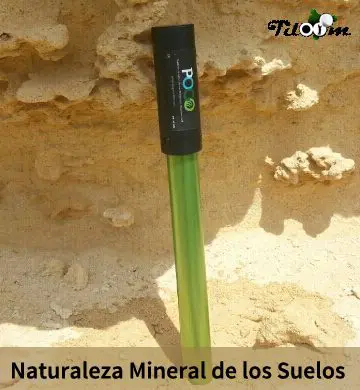
Often, golf courses have fairways and fairways that have been roughs built on the original soil with its mineral nature, and it is therefore important to know the origin of the different soils and their characteristics. A first approach to understanding them starts with the lithological study of the area, as this will give us information about the nature of the soil of our streets.
Thus, the different lithologies that abound in the vicinity of the golf course will give rise through weathering, erosion, etc. to the soil of our fairways and fairways. roughs.
The possible land horizons for our streets are:
Soil weathering leads to the migration of slightly soluble minerals (calcite), moderately soluble minerals (gypsum), very soluble minerals such as sodium salts and sulphates, and even colloidal particles transported in suspension.
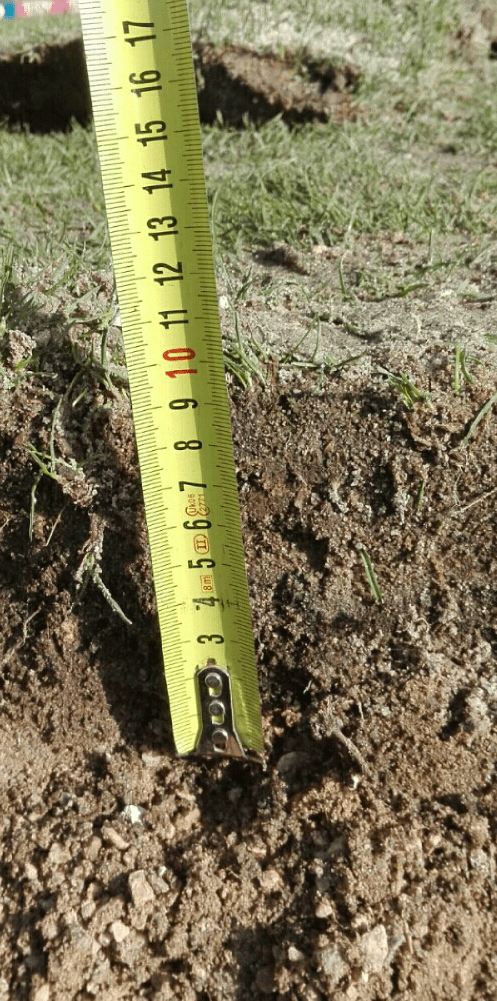
The carbonate nature of many lithological materials determines that calcium carbonate washing plays a very important role in the genesis of many soils, as is the case of calcic and petrocalcic horizons, the latter characterised by a strong cementation caused by the massive accumulation of calcium carbonate.
The gypsification process consists of the translocation in solution of gypsum from the surface to precipitate at depth, being petroglypsic if it is very intense and forms a cemented layer in the soil.
In the case of salts that are more soluble than gypsum, their mobility is greater, producing downward and upward movements due to capillary phenomena caused by high temperatures and evaporation, thus producing saline horizons.
The process of illimerisation or translocation of clay is the mobilisation, by washing in suspension, of clay from an upper horizon to a lower horizon in which it is deposited, giving rise to an argic horizon.


 Español Español
  English (UK)
 Português
 Français
 Italiano
 Deutsch
 العربية