

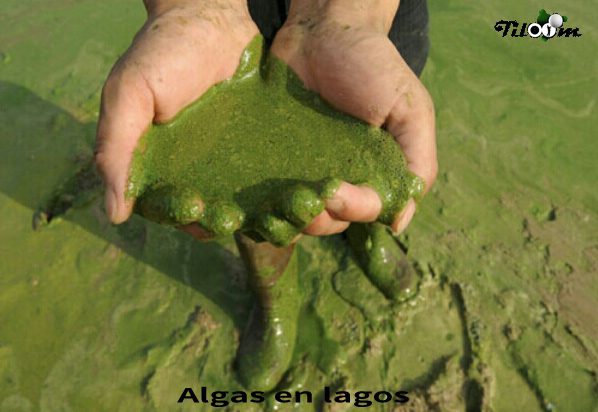
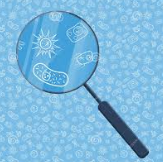
The algae are the most common aquatic plants found in golf course water bodies. These include the phytoplanktonthe filamentous algae and the carophytes (Chara-type macroalgae). It is important to maintain adequate control over the growth of these algae, as excessive growth leads to poor lake views, bad smells, anoxia and death of fish, incrustations in sprinklers, etc.
Chara is a macroalgae, also known as ova, which is indicative of a good WATER QUALITY. Eutrophication of the water, on the other hand, kills them.

Phytoplankton, consisting of cyanobacteria and diatoms, are algae that can rapidly increase in volume if they encounter high levels of nitrogen and phosphorus, and can grow so rapidly that they can even decrease the total dissolved oxygen in lakes, resulting in damage to aquatic life.

There are many species of filamentous algae, but they all have a similar behaviour. Their growth begins in late winter-early spring, when rising temperatures and the intensity of sunlight activate the spores, until in the summer periods they can join together until they occupy the entire surface of lakes, floating on the surface. They also need high nutrient levels and high temperatures.

The main cause of algal growth is excess nutrients (nitrogen and phosphorus) leaching into lakes. Like higher plants, algae need the same stimulants: nutrients, heat and light.
Therefore, the most important for their prevention is the minimisation of nutrient levels, which requires an efficient and moderate use of fertilisers in the areas surrounding the water bodies, as well as the use of slow-release fertilisers, nutrition or with nitrification inhibitors.
The next step is the removal of some of the nutrients that are already present in the lakes through certain types of bacteria which also feed on these nutrients, eliminating the nutritional source of the algae. These bacteria should be used from spring onwards, as a minimum temperature of 10°C is required and the pH should be between 6 and 8.
Commonly used herbicides are elemental copper or sodium carbonate peroxyhydrate. For the effective use of herbicides such as copper sulphate it has to be borne in mind that at temperatures below 15 °C or water hardness above 50 ppm, the treatment is not effective.
The use of barley straw is also highly recommended because when it rots, it produces substances that inhibit the growth and reproduction of algae (hydrogen peroxide). Another strategy is the use of dyes that filter out the wavelengths necessary for photosynthesis. Grass carp can also be used as biological methods for algae abatement.
 Español Español
  English (UK)
 Português
 Français
 Italiano
 Deutsch
 العربية


2 responses
Greetings: In Guatemala we have a lake called Amatitlán, in the municipality of the same name. There is an institution here that is the Lake Authority, but I believe that it has other interests because it does not control the problem of the small algae that are turning this body of water into a swamp. The problem lies in the fact that there are several big cities around and there are not enough treatment plants, and meanwhile the lake is dying. Now I am looking for help because I am doing it personally, and have the right material to control it. Do you think you can help me?
Removing nutrients from a large volume of water is costly. Report the problem to the authorities and the media. We at Tiloom wish you luck.