
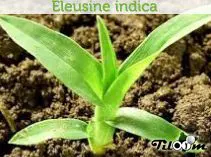
Eleusine indicaalso called goosegrassis another typical weed which comes to colonise compacted and poorly drained areas in summer, generally in areas of our fields.
It has a prostrate growth that allows it to survive low mowings.
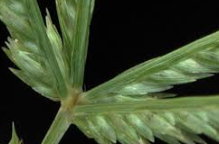
Its seed is observed at the end of summer. It is an annual variety that usually germinates in late spring, i.e. four to six weeks after the digitaria.
It is recommended that a treatment control (pre-emergent) of the eleusine indica on agrostis and/or non-reseeded bermudagrass from the mixture of bensulide and oxadiazinon, although it is not indicated for poa annua. However, check on the herbicide label that it is registered for use on greens.
The turf must be dry at the time of application, and an irrigation must be applied for incorporation.
The ideal time of application is when the air temperature is above 26°C. Postemergence control of Poa annua in tees or lanes is given by Fenoxaprop p-ethyl at low doses and every two weeks for the control of eleusine indica in the early stages of growth in summer.
Ditiopyr and pendimethalin are recommended as effective pre-emergence herbicides for the control of Eleusine, although their use on Poa annua alleys may be affected by phytotoxicity, especially in summer periods.
On bermudagrass greens, foramsulfuron and diclofop are recommended for postemergence control of Eleusine indica, although resistance to these herbicides may occur.
Below is a table for possible treatments on different turfgrasses.
Active substance: Resistant varieties
Pre-emergents
ditiopir: Poa pratensis, Fescue, Rye grass, Bermuda grass, Zoysiagrass
pendimethalin: Bermuda, Zoysiagrass
oxadiazon: Poa pratensis, Fescue, Rye grass, Bermuda grass, Zoysiagrass
prodiamine: Poa pratensis, Fescue, Rye grass, Bermuda grass, Zoysiagrass
Postemergents
fenoxaprop: Agrostis, Poa pratensis, Fescue, Zoysiagrass
fluazifop: Festuca arundinacea, Zoysiagrass
mesotrione: Poa pratensis, Festucas, Rye grass
 Español Español
  English (UK)
 Português
 Français
 Italiano
 Deutsch
 العربية