
Nowadays, affordable technology is available that allows agronomic diagnostics on any field. The best way to manage our sports surfaces is to get the diagnosis right in order to remedy their deficiencies, be they nutritious, biomechanicsof gameplay y healthamong other features of the installation.
The correct diagnosis of the nutritional status of our sports surfaces will require foliar and physical-chemical analyses, microbiologicaletc. The physico-chemical tests may be based on criteria based on ranges such as the MSLNSLAN or others depending on the extractant used in the test (normal Mellich III in the USA, barium chloride used more in Spain, ammonium acetate, etc.) or according to the pH of the soil (Olsen extraction at basic pH or Bray for phosphorus at acid pH).
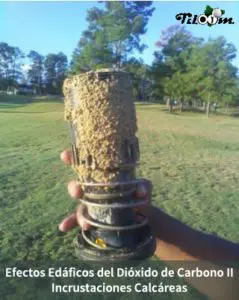
The value of the pH is vital, but continuously measured, its buffering power (of both soil and irrigation water) in order to decide which nature of the soil and irrigation water to use. fertiliser is more suitable or if it needs amendments of some kind. We have examples of very acidic soils (around pH 5.5) typical of some high rainfall sandy fields, poorly buffered and heavily undersaturated in Calcite, which will have permanent low Calcium values unless pH values above 6 are re-established.
We also recommend using different analytical techniques to arrive at the same diagnoses in a conclusive way. Thus, we can study the availability of calcium in an acid soil by physico-chemical analysis and at the same time use soil DNA sequencing studies to test the richness of the microbiology that influences the cycles of calcium metabolism on our greens or football pitches.
The availability of Carbon, Nitrogen, Phosphorus, Potassium, Calcium and other nutrients on our greens or football pitches depends on the flow of losses and gains that occur through the micro-organisms themselves.
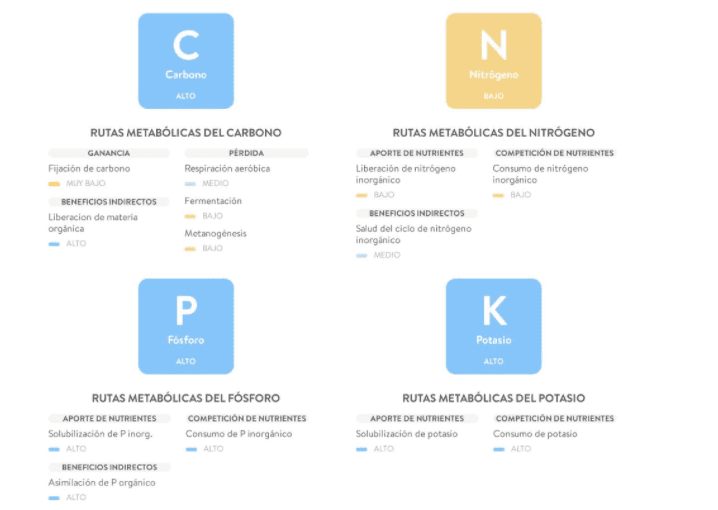
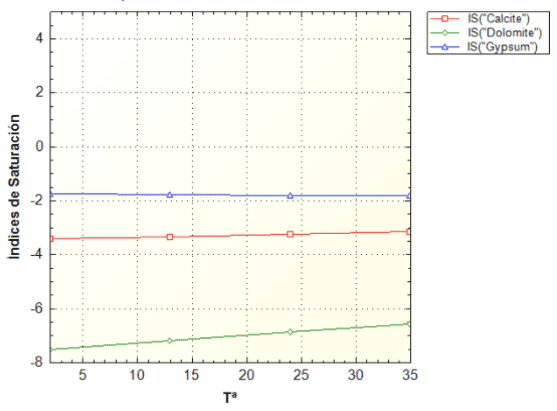
The studies carried out through different techniques, whether microbiological, physical-chemical or solubility studies and their results will further assure us about our diagnostics. For very acid soils, the study of the saturation indexes of the different chemical species such as calcite or gypsum in the soil will give us extra information of great interest as it will inform us about the need for calcareous amendments or the application of gypsum.
Examples are those cases of acid soils highly unsaturated in Calcite, with very negative saturation index values below - 2.5, these cases reveal important Calcium deficiencies in the leaf tissue.
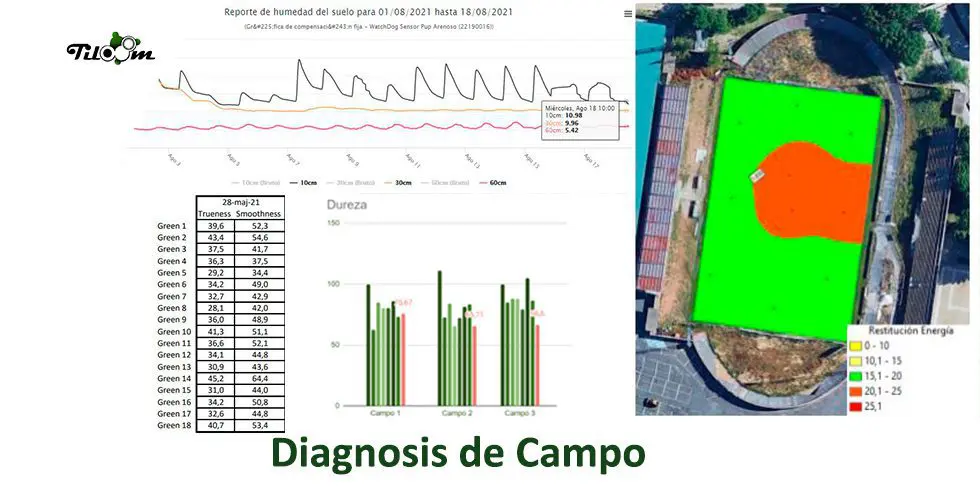
Agronomic diagnoses should be based on robust and objective evidence, if possible as a result of different standardised tests leading to the same results.
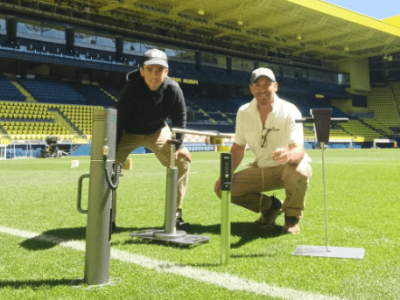
Certain field trials may result in undesirable values such as low infiltration rates, which may be caused by an excess of organic matter in the field, an excessively fine texture outside the recommended curve, or high compaction.
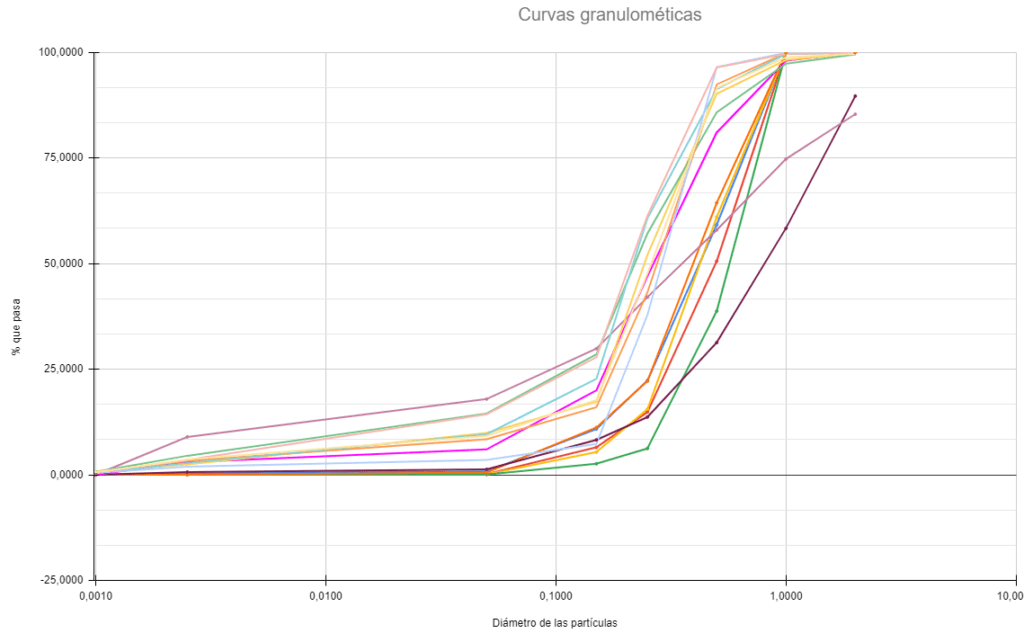
Hence the need to carry out the necessary analysis to verify the root cause of the test failure.
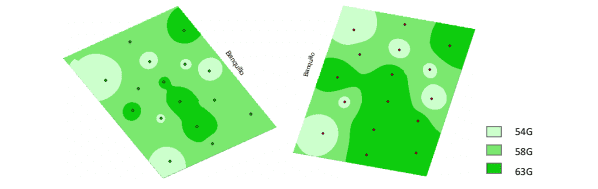
At similar hardness values, more homogeneity in infiltration rates will occur, provided that the % of organic matter or textures of the different points studied are similar.
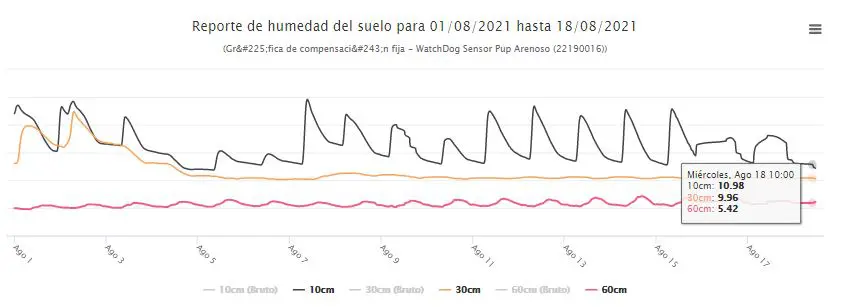
All of these tests and measurements can be combined with biotechnological treatments such as the successful OxyTurf an organic matter controller, thatch or black layer.
New solutions are here to stay and help us to increase the quality of the field. Never before have we had so many tools and so many possibilities to achieve a quality, healthy and safe field for users.
Ask us at info@tiloom.com about our 360º reports that we carry out to study the fertility, biomechanics, playability and state of the facilities in order to get your agronomic remediation of the field right.
 Español Español
  English (UK)
 Português
 Français
 Italiano
 Deutsch
 العربية