

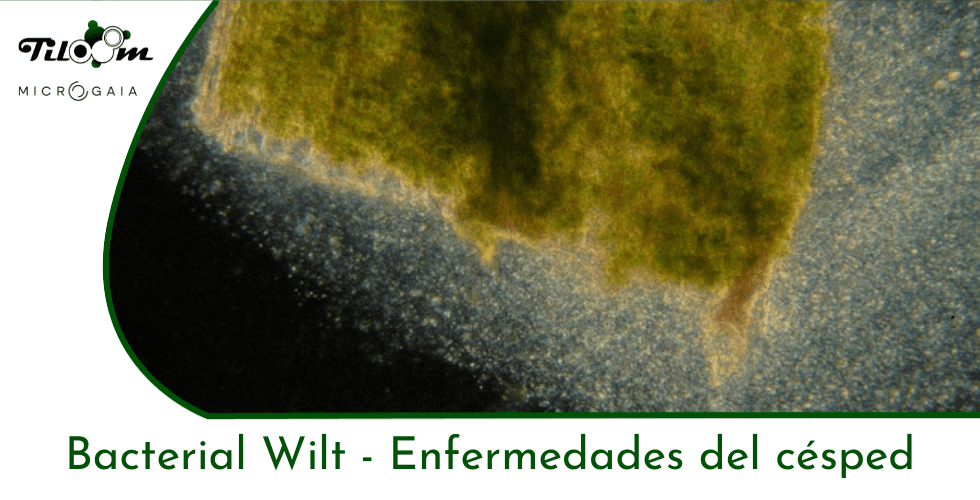
The disease of the Bacterial Wilt, caused by the bacterium Xanthomonas translucens pv. poae, has been detected in various locations, starting with numerous golf courses in North America, and was first scientifically recorded in 1917 (Jones et al 1917). This disease has been the subject of research at several universities and research centres, including Michigan State University and the University of Rhode Island. Furthermore, it has been observed that the bacterium can be found in root zone soils and turf systems worldwide, suggesting that it is an organism naturally present in most soils and turf systems.
Xanthomonas translucens is a Gram-negative bacterium known to cause Bacterial Wilt in turfgrass. The bacterium is classified as Xanthomonas translucens pv. poae and is responsible for causing symptoms such as wilt and leaf necrosis in affected turf.
It is mainly found on the greens of golf courses, where frequent mowing creates wounds in the turf, providing an entry point for the pathogen to cause disease. The disease is most prevalent during the summer and can cause significant damage to turf under optimal conditions for its development.
The bacterium has been the subject of research to identify differences in virulence between isolates and to understand the factors influencing disease severity. Despite efforts, no fully resistant turfgrass cultivars have been identified to date, although certain cultivars, such as Penncross and Penneagle, have shown increased resistance to Bacterial Wilt.
Taxonomically, the bacterium Xanthomonas translucens pv. poae belongs to the phylum Pseudomonadota, class Gammaproteobacteria, order Xanthomonadales, family Xanthomonadaceae and genus Xanthomonas.
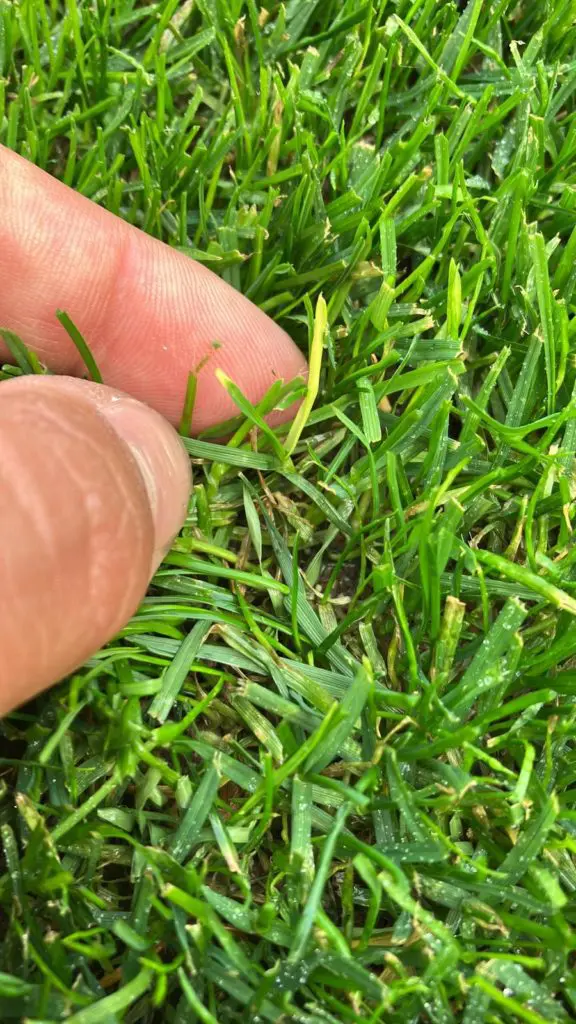
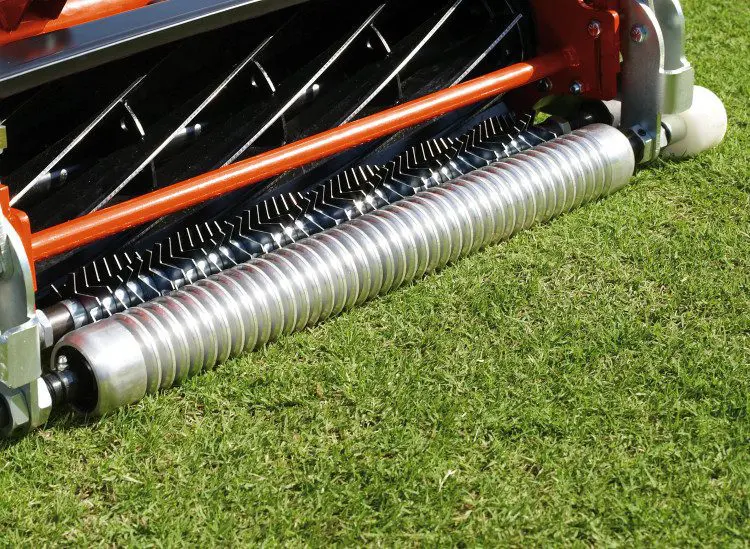
The bacteria can be spread by leaf wounds through the cutting equipment, resulting in the rapid death of susceptible plants. Once inside the plant, the bacterium causes damage through enzymatic activity, the production of toxins and the obstruction of xylem vesselsThis disrupts water transport and causes wilting and eventual death of the plant.
The bacterium can survive in infected plant debris and is spread through rainwater or mechanically by the gardening equipment itself, such as lawn mowers and hoses.
The life cycle of the bacterium is influenced by environmental factors such as prolonged moisture, poorly drained soils and seasonal changes, which can increase the incidence of the disease.
Bacterial wilt of turfgrass manifests itself with a number of characteristic symptoms.
Initially, small copper-red spots are observed, which increase in size as more plants die. In addition, there are yellow spots on the leaves, dark brown lesions, dark green and shrivelled leaves, as well as elongated leaves yellow in colour. In the case of golf lawns, the following may develop numerous small spotsdimpled or mottled, approximately 0.25-0.75 inches (0.5-2 cm) in diameter.
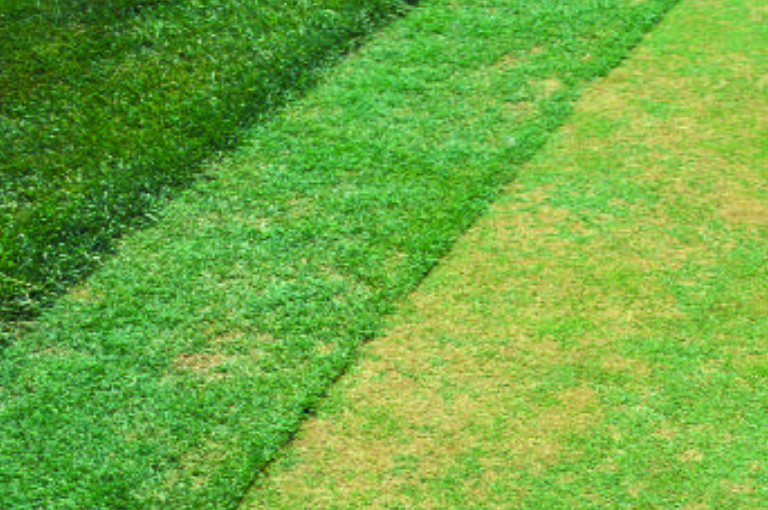
As the disease progresses, widespread wilting is observed, with darkening and twisting of the leaves, and retreat to the leaf sheath. No water-soaked lesions appear on the leaf tissue, but a generalised wilting is observed, with darkening and twisting of the leaves, and a extensive colonisation of xylem vessels which interrupts the movement of water.
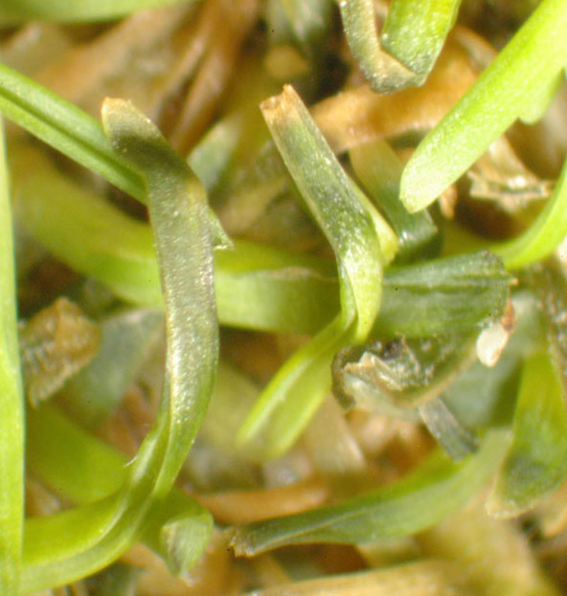
One of the hallmarks of bacterial diseases in turfgrass is the observation of bacterial streaming from the xylem vessels, which manifests itself as a viscous exudation by cutting an infected stem or root. In addition, the disease can cause plants to die, forming white or brown patches on the lawn. Symptoms of bacterial wilt may include difficult to diagnose in the field and require more advanced techniques to confirm the presence of the disease.
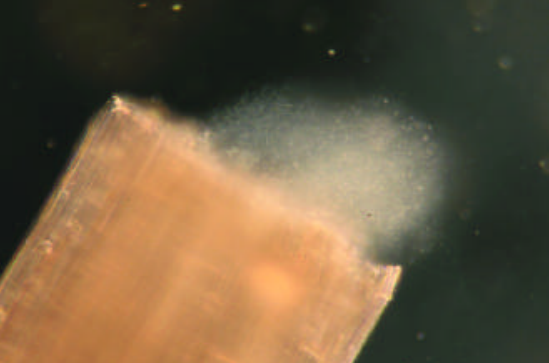
Conditions conducive to the occurrence of bacterial wilt disease in golf course turf include:
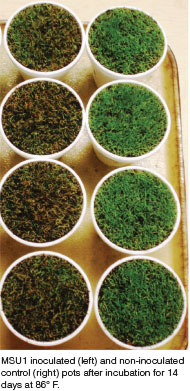
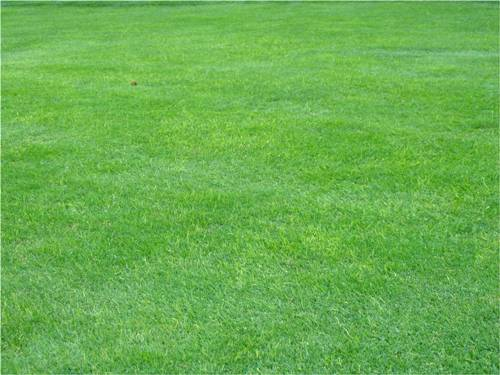
The grass species most vulnerable to bacterial wilt disease are poa annua and the agrostis stolonifera. These species are particularly susceptible to infection by the bacterium Xanthomonas translucens pv. poaewhich causes the disease.
The bacterium enters plants through natural wounds or openings, which can occur in high-traffic areas or those subject to mechanical stress, such as golf greens. Furthermore, the disease tends to be more severe when plants are under environmental stress – such as mowing to a low height, soil compaction and shade – and when temperatures are high. Consequently, these grass species are particularly vulnerable to bacterial wilt.
Cultural control of bacterial wilt in turfgrass involves a number of strategies to minimise the spread and impact of the disease. These strategies include:
1. Adjustment of cutting practicesMowing is recommended in the afternoon, after the grass is dry, to discourage the spread of bacteria in wet grass. Mowing height should be increased and mowing frequency reduced.
2. Avoid abrasive practicesAbrasive cultural practices, such as vertical cutting, topdressing and aeration, should be avoided when the disease is active, as these practices can create wounds on the plants that facilitate the entry of the bacterium.
3. Selection of resistant cultivarsThe use of resistant cultivars, such as Penncross or Penneagle. 4. Irrigation managementIt is recommended to minimise leaf wetness and avoid excessive and recurrent watering to reduce the spread of the disease.
Chemical control of bacterial wilt in turfgrasses is a challenge because of the limited effectiveness of fungicides against bacterial pathogens. However, certain fungicides, such as demethylation inhibitors and products containing acibenzolar-S-methylhave proven to be effective when applied preventively to reduce wilt caused by bacterial pathogens.
The copper hydroxide has also shown efficacy in reducing bacterial pathogens on plant surfaces, although phytotoxicity concerns have been reported with frequent use on close-cut turf.
Moreover, it does not there are antibiotics labelled for the control of plant pathogenic bacteria in turfgrass, and their cost can make them impractical for turfgrass management. Therefore, adjustments to plant growth regulator programmes and preventative fungicide application are the primary control options for management.
If you have any doubts about the disease affecting your lawn, Tiloom offers through its partner Microgaia Biotech (a technology-based company, spin off of CEBAS-CSIC) the accurate diagnosis of the most frequent diseases of turfgrasses through qPCR analysis. Write to us at info@tiloom.com and we will take care of collecting your samples.
Accurate knowledge of potential diseases affecting your lawn will enable you to act preventively and manage it in the most effective way. sustainable and efficient possible.
 Español Español
 English (UK)
 Português
 Français
 Italiano
 Deutsch
 العربية

2 responses
I am interested in this equipment and what is the price? I live in california Kit phytfieldlab de Microgaia
Hello Enrique, write to us at info@tiloom.com and we will give you a quotation, thank you.