
Light is a fundamental element for the growth of lawns in sports fields and it is therefore very important to be aware of the differences between different light emitting equipment.
Light is a form of energy emitted as electromagnetic radiation that spans a very broad spectrum, from long-wave radio frequencies, which allow us to listen to music emitted from the cold Siberian steppe, to gamma rays, the highly penetrating waves produced during the decay of radioactive element nuclei.
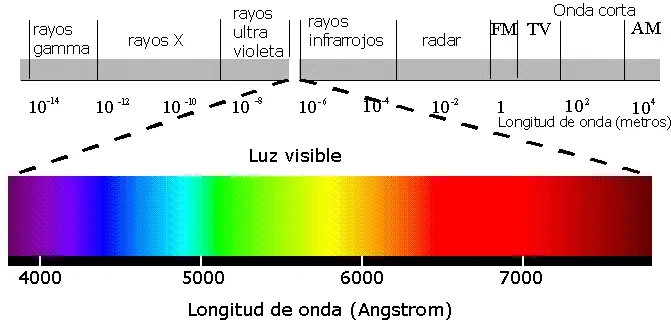
Plants absorb light from the visible spectrum, which ranges from 380 nanometres of purple (the most energetic colour) to 780 nanometres of red (the least energetic colour) in order to absorb light. plant growth. The sun is capable of emitting electromagnetic energy across the entire electromagnetic spectrum, thus fully covering the needs of plants.
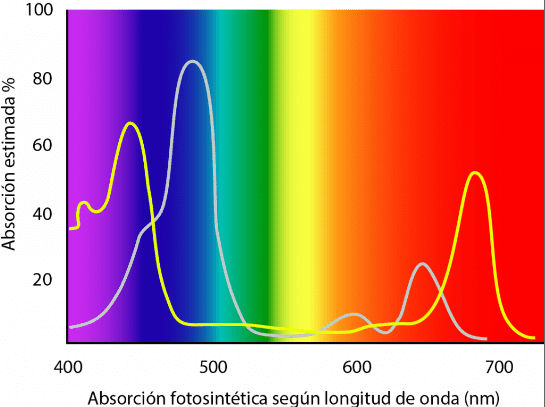
It could be said that they absorb the entire spectrum, but in reality there are two colours where absorption stands out thanks to their light-receptor molecules, the purple and red peaks.
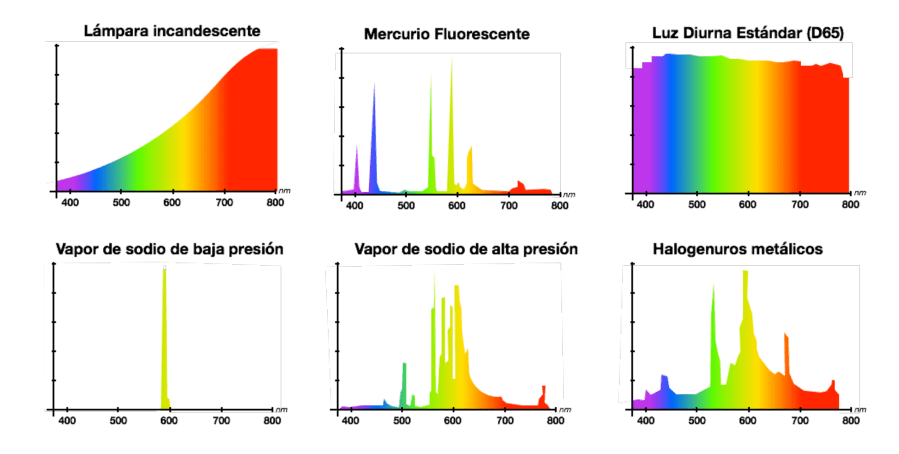
When irradiating our lawns with artificial light it is very important to know what fraction of the electromagnetic spectrum the lamp emits, as a halogen lamp emits hardly any purple and a fluorescent lamp hardly any red.
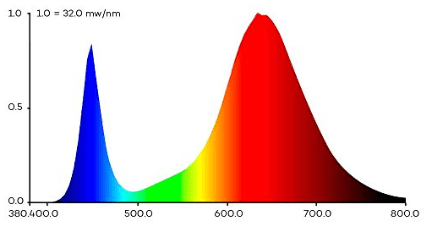
That is why if you want to give a contribution of radiation to areas, for example, shaded areas, it is very necessary to use LED lamps, since this technology allows the manufacture of lamps with defined spectra on demand. LEDs can be used to manufacture a luminaire that emits the desired frequencies and thus meet the lighting needs of our lawns.
 Español Español
  English (UK)
 Português
 Français
 Italiano
 Deutsch
 العربية